Amsterdam by Bike: A Beginner’s Guide to Cycling the City
How to hire a bike, read Dutch cycling etiquette and ride Amsterdam’s canal routes safely as a first-time visitor on two wheels.
By Marta Oliveira · Published 5 March 2026 · Updated 1 April 2026 · 6 min read
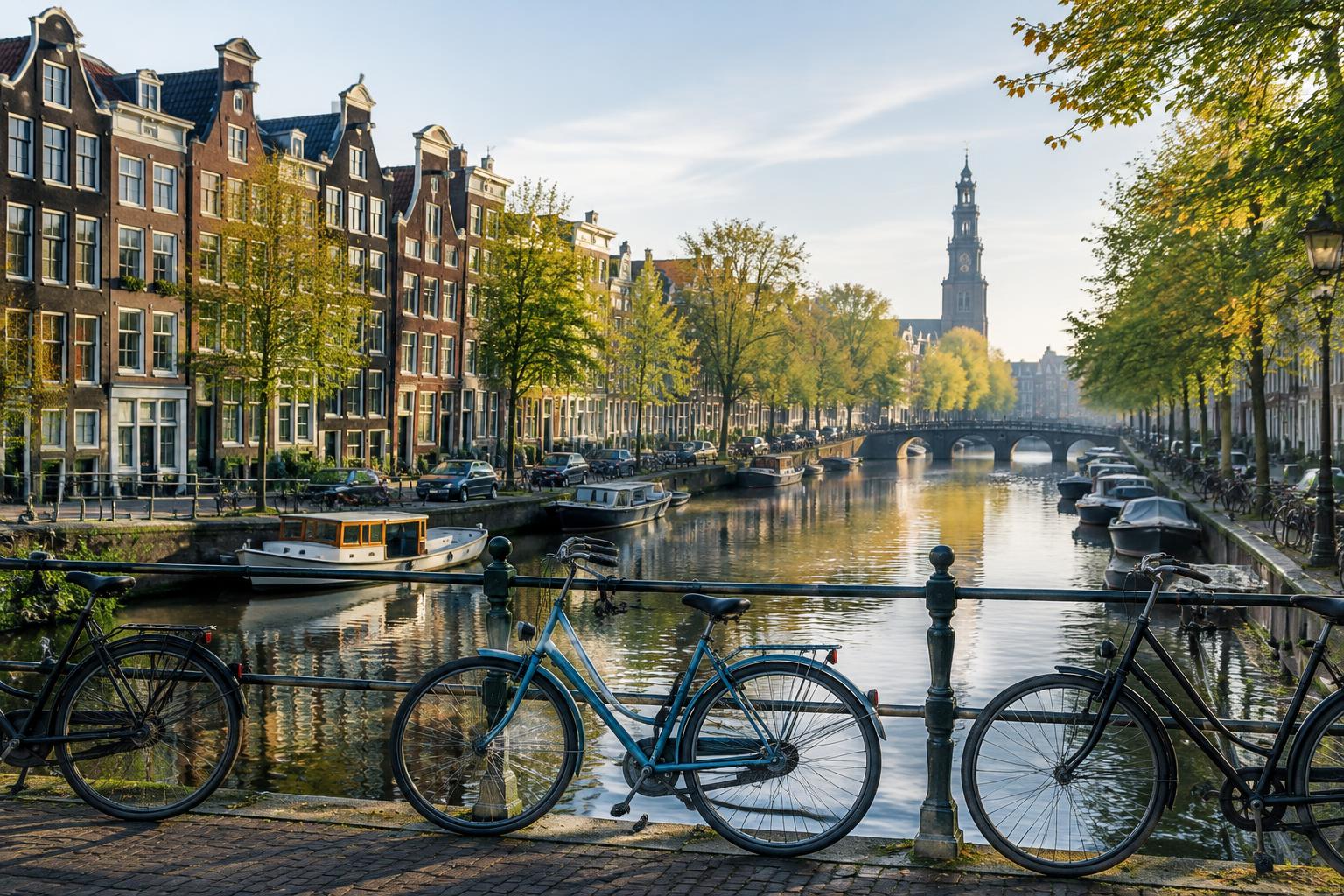
At a glance
- Amsterdam has over 500km of dedicated cycle paths within the city
- Hand signals and shoulder checks are expected, not optional, from every rider
- Hire shops cluster around Centraal Station and the Jordaan
- Trams and cars, not pedestrians, are the main hazard beginners underestimate
Cycling is the default way Amsterdam residents move around their own city, not a novelty laid on for visitors, and that distinction matters. The bike paths are full of commuters, parents carrying children in cargo bikes, and delivery riders moving at a genuine pace, all of whom expect everyone else on the path — including a first-time visitor on a rented bike — to follow the same unwritten rules they do. Learning those rules before setting off makes the difference between an enjoyable afternoon and a stressful one.
Hiring a bike: where and what to expect
Rental shops cluster near Centraal Station, around the Jordaan and along Vondelpark’s edges, and most offer simple single-speed or three-speed town bikes (omafiets) with a back-pedal or hand brake, a basket, and a frame lock fitted to the rear wheel. A single day’s hire typically includes a basic lock and sometimes a second chain lock for securing the bike to a fixed rack, which is worth using every time you stop, even briefly — bike theft in Amsterdam is common enough that locking a rental bike to something fixed is standard practice, not excessive caution. Most shops ask for ID and a card deposit, and it is worth photographing any existing damage before riding off.
Reading the cycle path network
Amsterdam’s cycle paths (fietspad) are physically separated from both the road and the pavement in most of the city centre, marked with a round blue sign showing a white bicycle, and are for bikes only — mopeds have been required off the main cycle paths and into general traffic on an increasing number of streets in recent years, though this still varies by route, so do not assume a lane is bike-only everywhere. Cycle paths often run in both directions on a single stretch, so always check for oncoming cyclists before pulling out, particularly around blind corners by canal bridges.
- Round blue sign with a white bicycle: dedicated, compulsory cycle path
- Dashed white line on the path: an informal lane split for two-way flow
- Red-tinted asphalt: a strong visual cue for a cycle route through a junction
- Shared fietsstraat (‘bike streets’): cars are guests and must give way to cyclists
Signal, check and commit: the core etiquette
Dutch cyclists signal turns with an outstretched arm well before the junction, check over their shoulder before changing position, and expect other cyclists to do the same — silent, last-second lane changes are the single most common cause of near misses involving visitors. Ringing a bell to indicate your presence when overtaking, rather than swerving around silently, is both expected and appreciated. At junctions without lights, right of way generally goes to traffic from the right, but the safest approach for a beginner is to follow the lead of cyclists directly ahead rather than trying to apply the rule cold.
The real hazards: trams, car doors and tourists on foot
Visitors tend to worry most about hitting a pedestrian, but the more common real hazards are trams, which share road space with cyclists on several central routes and have fixed rails that can catch a narrow bike tyre at an angle, and car doors opening suddenly into a cycle lane as drivers park. Crossing tram tracks at as close to a right angle as possible, rather than at a shallow angle, avoids the wheel-catching problem. Giving parked cars a reasonable buffer, rather than hugging the kerb, reduces the door-opening risk.
Good routes for a first ride
Vondelpark offers a car-free, relatively low-stakes loop for building confidence before venturing into traffic, with wide paths and a slower, more leisurely crowd. Once comfortable, the canal ring around Prinsengracht, Keizersgracht and Herengracht makes an easy, mostly flat route past gabled townhouses, with frequent bridges offering a reason to stop. For a longer ride, the path out to Amsterdamse Bos, a large park south of the city, gives a genuine taste of Dutch countryside cycling within about 30–40 minutes from the centre.
Parking and avoiding theft
Never leave a bike unlocked, even for a minute, and always lock the frame (not just the wheel) to a fixed rack rather than relying solely on the built-in rear-wheel lock, which only slows a thief rather than stopping one. Large guarded bike parking facilities exist near Centraal Station, and using one if available is safer than leaving a rental bike chained to a random railing overnight. Rental companies generally make clear in their terms what happens if a bike is stolen, and it is worth reading this before signing.
- Hire from a shop near Centraal Station or the Jordaan and photograph existing damage first
- Start in Vondelpark or along a canal ring before riding through denser junctions
- Signal turns early, check over your shoulder, and ring your bell rather than swerving silently
- Cross tram tracks at as close to a right angle as possible
- Always lock the frame to a fixed rack, even for short stops
Electric bikes and cargo bikes
Many rental shops now offer electric-assist bikes (e-bikes) alongside standard town bikes, which flatten out the slight rises over canal bridges and make longer trips to Amsterdamse Bos or further afield more comfortable, though they are heavier and take slightly longer to stop — worth practising braking gently in a quiet side street before joining busier paths. Cargo bikes (bakfiets), used widely by Dutch parents to carry children or shopping, are a distinctive sight on the paths and are considerably wider than a standard bike; giving them extra space when overtaking is good practice, since their riders have limited ability to swerve.
What to do if you are involved in a minor incident
Minor collisions between cyclists do happen, usually at low speed, and the expected etiquette is to stop, check the other person is unhurt, and exchange details if any bike or property damage occurred, much as with a minor car accident elsewhere. Rental bikes usually come with basic third-party liability guidance in the hire agreement; reading this before riding off, rather than after an incident, is sensible. For anything more serious, Dutch emergency services are reached on 112, the same number used across the European Union.
Cycling with children or as a small group
Rental shops across the centre offer children’s bikes, tandem attachments and child seats, and several also rent cargo bikes to visitors comfortable with their extra width and weight, which is a popular way for families to explore together without needing every member to cycle independently. Groups of adult beginners are better off riding in a loose single file rather than side by side, since Dutch cycle paths are often narrower than they first appear once oncoming traffic and overtaking cyclists are accounted for, and riding two abreast on a busy path is a common source of friction with local commuters.
When not to cycle
Heavy rain, which Amsterdam gets regularly year-round, makes cobbled streets and painted road markings noticeably slippery, and beginners unused to braking on wet cobbles should slow down earlier than feels necessary. During the evening rush (roughly 4.30–6.30pm on weekdays), cycle paths around the centre and near the main stations become genuinely congested with fast-moving commuters, and a first-time visitor may find it more relaxing to walk or wait out the rush rather than join it.
Check before you go
Check your rental agreement’s theft and damage terms before riding off, and confirm current moped and e-scooter restrictions on cycle paths with the rental shop, as rules have changed in recent years.
Sources and official information
- I amsterdam (official visitor information)
- Gemeente Amsterdam — cycling in the city
- Netherlands Board of Tourism & Conventions
Prices and timetables are approximate and change often. Spotted an error? Tell us — corrections are noted under our editorial policy.
About the author
Marta OliveiraCity guides editor. Marta edits Caesar Plaza’s city guides, covering walking routes, public squares, neighbourhoods and public transport.
Related guides
City Guides
Walking a New City Safely: Practical Habits That Actually Work
Sensible, specific habits for walking unfamiliar cities confidently, with real examples from Lisbon, Paris, Marrakech and Istanbul.
By Marta Oliveira · 5 min read
City Guides
Using Public Transport in an Unfamiliar City Without the Stress
A practical guide to tickets, contactless payment and cards across London, Lisbon, Paris and Istanbul, for travellers new to each system.
By Marta Oliveira · 5 min read
Trip Planning
Choosing Where to Stay in a City You’ve Never Visited
A method for picking the right neighbourhood when booking accommodation somewhere unfamiliar, with examples from Lisbon, Paris and Berlin.
By Marta Oliveira · 5 min read