Kyoto in Winter: A Quieter, Cheaper Way to See the City
Kyoto between December and February trades cherry blossom crowds for thin winter light, quieter temples and lower hotel rates — here is how to plan around it.
By Daniel Reyes · Published 18 December 2025 · Updated 25 February 2026 · 5 min read
At a glance
- December–February is Kyoto’s quietest tourist season outside the New Year holiday period
- Hotel rates can run 20–30% lower than during cherry blossom or autumn foliage season
- Some temple gardens close or reduce hours around the New Year (around 29 Dec–3 Jan)
- A Kansai-area rail pass can be worth it if combining Kyoto with Osaka and Nara
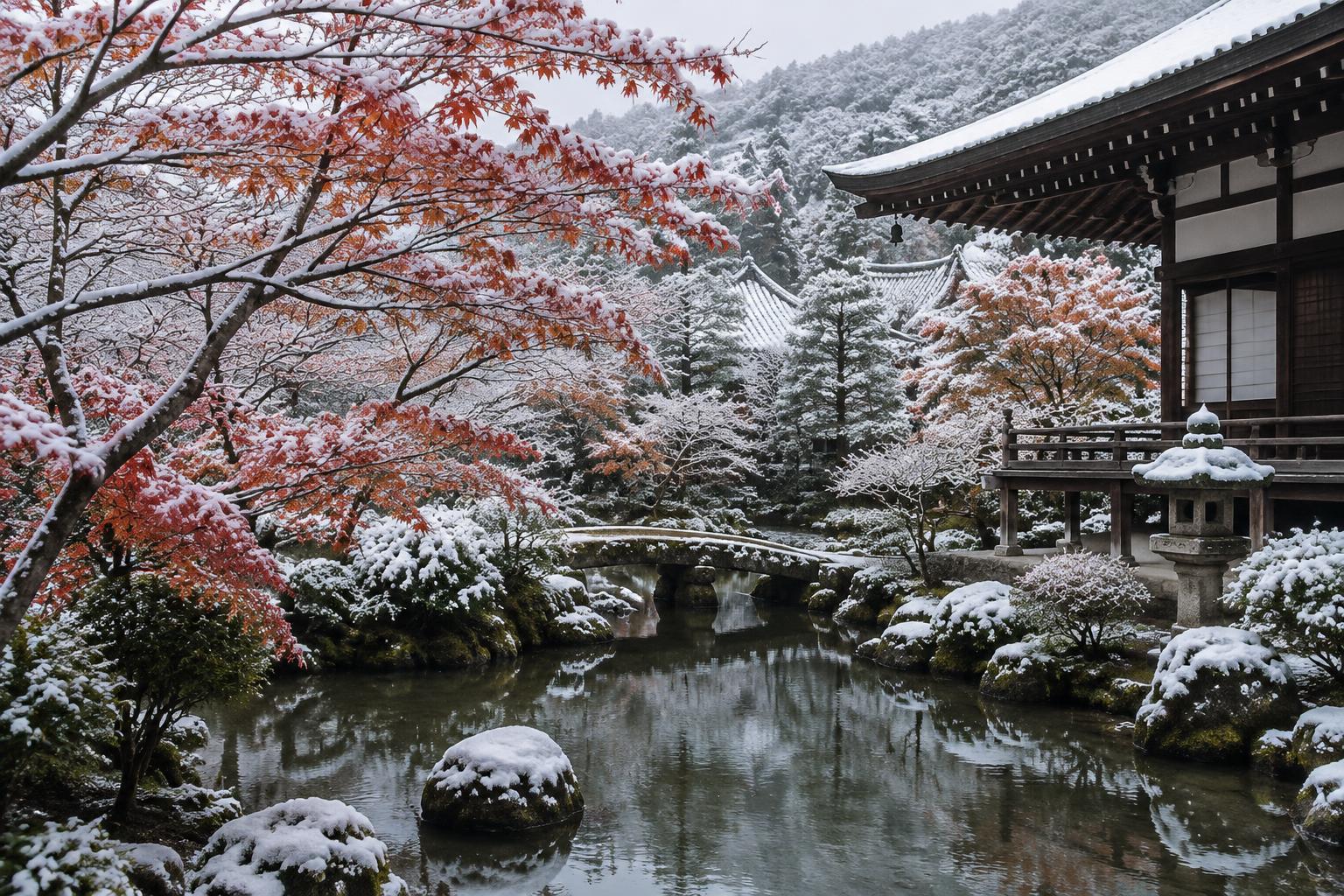
Kyoto’s reputation rests heavily on two short, famously crowded windows — cherry blossom in late March and April, and autumn foliage in November — when temple gardens and narrow lanes such as Gion fill with visitors well before opening time. Winter, by contrast, is the city’s quiet season: cold, often crisp and clear, occasionally dusted with snow, and considerably calmer for walking the same gardens and streets without having to queue.
What winter weather actually feels like
Kyoto winters are cold but generally dry, with daytime temperatures often between 5–10°C and colder mornings; snow is occasional rather than reliable, though a light dusting over a temple roof is one of the more photographed sights of the season when it happens. Layering is more useful than a single heavy coat, since many traditional buildings and some restaurants are not centrally heated to the standard a Western visitor might expect.
Temples and gardens without the queues
Fushimi Inari Taisha, with its thousands of vermilion torii gates climbing the hillside, is open 24 hours and free to enter year-round, but the famous photographs of an empty gate tunnel are far easier to get before 8am in winter than at almost any other time of year. Kinkaku-ji (the Golden Pavilion) and Ginkaku-ji (the Silver Pavilion) both remain open through winter with their usual hours, and the reflection of the gold pavilion in its pond is, if anything, more striking against a bare winter garden. Check individual temple websites for exact winter opening times, since a small number reduce hours or close for a few days around the New Year period (roughly 29 December to 3 January), when many Japanese families also travel, making that specific window busier than the rest of winter.
- Fushimi Inari Taisha — open 24 hours, free entry, best visited very early morning
- Arashiyama bamboo grove — quieter in winter, combine with the nearby Tenryu-ji temple garden
- Kiyomizu-dera — check for winter evening illumination events, held on selected dates
- Gion district — fewer crowds make it easier to spot geiko and maiko respectfully from a distance in the evening
Lower prices, with one exception
Hotel rates across Kyoto typically drop 20–30% below cherry blossom or autumn foliage peak pricing for most of December, January and February, and flights into Kansai International or Osaka Itami airports follow a similar pattern. The clear exception is the New Year holiday period itself, when domestic travel within Japan spikes and both transport and accommodation prices rise accordingly — booking outside that specific window captures most of the winter savings.
Getting around, and whether a rail pass makes sense
Kyoto’s city bus network covers most major sights and a one or two-day bus pass is usually cheaper than paying individual fares if visiting four or more stops in a day. For day trips to Osaka or Nara, the JR Kansai area pass can be worthwhile; whether it pays off depends on exactly how many trips are planned, so it is worth totalling the individual fares for your specific itinerary against the pass price before buying, using JR West’s official fare calculator.
A sample two-day winter plan
- Day 1 morning: Fushimi Inari Taisha at opening time, then lunch nearby
- Day 1 afternoon: Kiyomizu-dera and a walk through the Higashiyama lanes
- Day 1 evening: Gion district walk and a kaiseki or izakaya dinner
- Day 2 morning: Arashiyama bamboo grove and Tenryu-ji
- Day 2 afternoon: Kinkaku-ji, then free time in central Kyoto shops and cafés
Winter will never draw the postcard crowds that blossom or foliage season does, but for travellers prioritising calm, lower costs and clear photographs over guaranteed pink or red leaves, it is arguably Kyoto’s best-kept secret season.
Where to stay in winter
Central areas such as Kawaramachi and the streets around Kyoto Station offer the widest choice of accommodation and the easiest access to both the bus network and rail connections for day trips, with winter rates for a comfortable mid-range hotel room often running roughly £60–£90 a night as of 2026, well below peak season pricing for the same room. For a more traditional experience, a ryokan in the Higashiyama or Arashiyama areas costs more but is especially atmospheric in winter, when a hot bath and a heated kotatsu table feel particularly welcome after a cold day of temple-hopping. Staying near a bus hub rather than deep in the quieter geisha districts generally makes a winter itinerary easier to manage given shorter daylight hours.
A sample winter day budget
- Mid-range hotel room (winter rate): roughly £65–£85 a night
- One-day city bus pass: roughly £4–£5
- Temple and garden entry fees across a day (two or three sites): roughly £10–£15
- Lunch (noodles or a set meal): roughly £6–£9
- Evening kaiseki or izakaya dinner: roughly £25–£45
Common mistakes to avoid
Underestimating how cold Kyoto mornings can feel, especially before dawn visits to Fushimi Inari, is the most common misstep — layering and warm, waterproof footwear matter more than visitors expect from a destination associated with cherry blossom photos. Booking the New Year period expecting winter's usual quiet and low prices is another frequent mistake, since this short window behaves more like peak season than the rest of winter. Visitors also sometimes skip reserving kaiseki or ryokan dinners in advance, assuming the quiet season means tables are always available, when popular winter-specific menus can still book out a few days ahead.
Pairing Kyoto with Osaka or Nara in winter
Winter's lower hotel rates and thinner crowds extend to Kansai's other major cities, making a combined Kyoto, Osaka and Nara itinerary more comfortable in winter than during peak seasons, when all three draw heavy crowds simultaneously. Nara's deer park and major temples are a straightforward half-day trip by train and lose little of their appeal in winter, since the deer are present year-round and the park itself is pleasant even without greenery. Osaka's indoor attractions, covered shopping arcades and food culture suit a cold winter day particularly well, offering a change of pace from Kyoto's outdoor temple-focused sightseeing. Basing the trip in Kyoto and taking day trips out, rather than switching accommodation city to city, usually simplifies logistics and avoids repeated check-in and check-out overhead during a short winter visit.
Shorter daylight hours in winter — sunset often falls well before 5pm in December — mean it is worth front-loading outdoor sightseeing earlier in the day and reserving indoor options such as museums, tea ceremonies or covered shopping arcades for the later afternoon and evening. This also suits the cold more comfortably, since the warmest part of a winter day in Kyoto is generally early afternoon.
Finally, it is worth packing hand and foot warmers, widely sold cheaply in Japanese convenience stores, for a comfortable early-morning temple visit in genuinely cold conditions — a small, inexpensive addition that makes a noticeable difference to how long a winter sightseeing session can comfortably last.
Check before you go
Check individual temple opening hours around the New Year period, confirm current JR Kansai pass pricing against your specific day-trip plans, and book winter kaiseki dinners a few days ahead.
Sources and official information
Prices and timetables are approximate and change often. Spotted an error? Tell us — corrections are noted under our editorial policy.
About the author
Daniel ReyesPlanning & slow travel editor. Daniel writes and edits the trip planning and slow travel sections: budgets, packing, documents, connectivity, rail travel and longer stays.
Related guides
Trip Planning
Travelling Off-Season: What to Check Before You Book
Shoulder-season and winter travel can mean lower prices and thinner crowds, but opening hours, ferries and festivals shift — here is what to verify before booking.
By Daniel Reyes · 6 min read
Slow Travel
Slow Travel on a Normal Budget: Sample Costs for a Longer, Calmer Trip
Slow travel does not require a sabbatical or a large budget. Here is how to plan a longer, unhurried trip with realistic sample budgets for everyday travellers.
By Daniel Reyes · 6 min read
Slow Travel
Building a Flexible Day Itinerary That Still Gets Things Done
A method for planning daily itineraries loose enough to absorb delays and good discoveries, while still covering the things you actually want to see.
By Daniel Reyes · 6 min read