Budapest’s Thermal Baths on a Budget
Budapest sits on a vast thermal spring system, and its public baths remain genuinely affordable. Here is how to choose one and keep costs down.
By Daniel Reyes · Published 19 November 2025 · Updated 15 January 2026 · 5 min read
At a glance
- Standard day entry to most Budapest thermal baths runs roughly £15–£22 as of 2026
- Weekday mornings are consistently quieter than weekends and evenings
- Towel and robe hire, lockers and massages are usually extra — factor them into the budget
- Széchenyi, Gellért and Rudas each have a distinct character and price point
Budapest sits above one of Europe’s richest networks of natural thermal springs, and the city’s public baths are one of its most distinctive, least expensive pleasures — a genuinely local institution rather than a tourist invention, used year-round by Hungarians for relaxation, health and simple routine. Visiting on a budget mostly comes down to choosing the right bath for what you want and knowing which extras to skip.
Which bath to choose
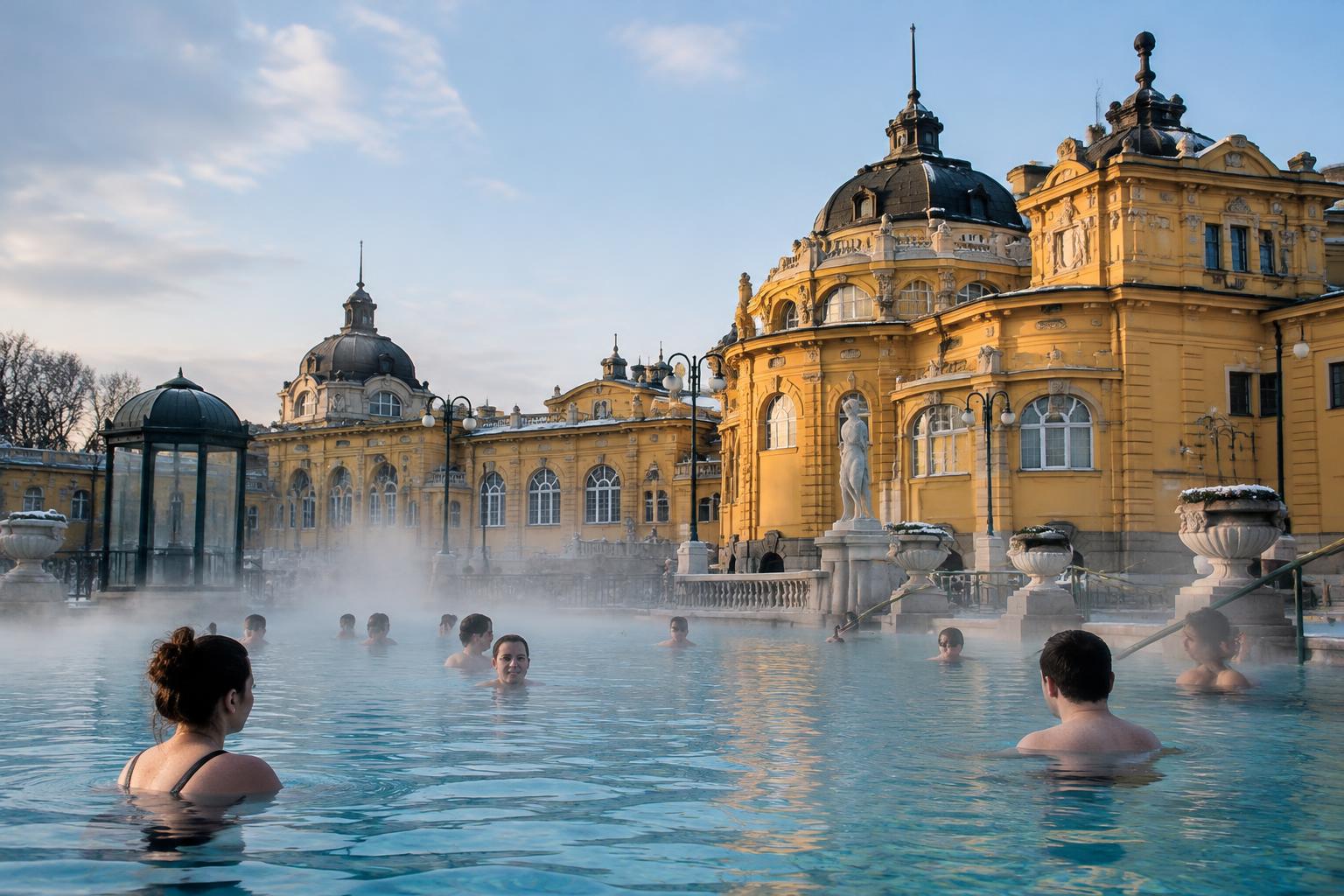
Széchenyi Baths, in City Park, is the largest and most photographed, with grand yellow neo-baroque buildings around a series of outdoor and indoor pools of varying temperatures — a good choice for a full afternoon and for first-time visitors, though also the busiest. Gellért Baths, attached to the historic Gellért Hotel, has an Art Nouveau interior considered one of the most beautiful bath halls in Europe, with a more architecturally striking but slightly smaller complex. Rudas Baths, dating in part to the 16th-century Ottoman period, has a more traditional, slightly more local atmosphere, including single-sex sessions on some days alongside mixed sessions — check the current schedule before visiting if this matters to your plans.
- Széchenyi — largest complex, best for a full day, busiest at weekends
- Gellért — most striking architecture, slightly smaller, good midweek option
- Rudas — most historic atmosphere, check single-sex versus mixed session times
- Lukács — quieter, less touristy, popular with regular local bathers
Keeping the cost down
Standard day-ticket entry at most of the major baths runs roughly £15–£22 as of 2026, though exact pricing varies by bath, by day of the week, and by whether a locker or a private cabin is included — cabins cost more than lockers. Towel and robe hire, swimming cap requirements (sometimes enforced in the swimming pools rather than the thermal pools), and extras such as massages are priced separately and can meaningfully increase the total if not planned for. Bringing your own towel, flip-flops and swimwear, and skipping the optional massage, typically keeps a visit close to the base entry price.
When to go
Weekday mornings, particularly soon after opening, are consistently the quietest time at every major bath, with weekends and summer evenings the busiest. Night-time Sparty events at Széchenyi, with music and bars set up around the pools, run on selected dates and cost considerably more than standard admission — worth it for a very different, livelier atmosphere, but not the place to go for a quiet soak.
What to bring and what to expect
Swimwear, flip-flops (the wet floor areas are better navigated with them), and a towel are the essentials; a swimming cap is occasionally required in lap-swimming pools but not the open thermal pools. Lockers require a small deposit, usually refunded, and most baths issue a wristband that tracks locker and cabin access electronically. Water temperatures vary significantly by pool, often ranging from a cool plunge pool around 18–20°C to warmer thermal pools in the high 30s°C, so moving between a few different pools over a visit is part of the normal routine.
A simple budget day plan
- Book an online ticket for a weekday morning slot at your chosen bath
- Bring your own towel, flip-flops and swimwear to avoid hire costs
- Spend two to three hours moving between pools of different temperatures
- Skip the optional massage unless it is a planned treat
- Finish with a simple lunch nearby rather than the bath café, which is often pricier
Where to stay for easy bath access
District VII (Erzsébetváros), near Széchenyi and City Park, puts the largest bath within walking distance and is also well placed for the ruin bar scene in the evening, with budget hostels and mid-range apartments widely available from roughly £35–£60 a night as of 2026. For Gellért and Rudas, basing yourself on the Buda side near the river keeps both baths within a short walk and offers quieter streets than the busy Pest nightlife districts, though fewer late-night food options. Staying near a Metro or tram line rather than directly adjacent to a bath is usually the more flexible choice, since most visitors combine a bath visit with sightseeing elsewhere in the city on the same day.
A sample one-day thermal bath budget
- Bath entry with locker, booked online: roughly £17
- Own towel and flip-flops brought from home: £0 extra
- Lunch near the bath rather than the on-site café: roughly £7–£10
- Return tram or metro fare to the bath: roughly £2–£3
- Optional 20-minute massage, if treating yourself: roughly £20–£30 extra
Common mistakes worth avoiding
The most frequent budget mistake is turning up without a towel or flip-flops and renting both on site, which adds up quickly if repeated over several bath visits during a trip. Another is assuming all pools and services are included in the base ticket — some baths charge separately for sauna access, certain massage types, or premium cabins, so it is worth checking the specific inclusions of a ticket before arriving rather than assuming parity across baths. Visiting on a weekend afternoon when aiming for a relaxing, uncrowded soak is also a common disappointment; the same bath at 9am on a Tuesday can feel like an entirely different, much calmer place.
Combining baths with the rest of a budget trip
Budapest's baths sit easily alongside the city's other low-cost pleasures, so a bath visit need not be the single expensive centrepiece of a day. The ruin bars of District VII, converted from derelict buildings and courtyards into informal bars, charge little more than a normal drinks menu and pair naturally with an evening after an afternoon soak. Walking across the Chain Bridge or up to Fisherman's Bastion costs nothing, and the Central Market Hall offers an inexpensive way to try Hungarian food such as lángos without a restaurant bill. Spacing a bath visit across a wider day of free or cheap activities, rather than building an entire day's budget around it, tends to produce both a better overall trip and a more relaxed, unhurried bath experience, since there is no pressure to extract maximum value from the ticket by staying for hours.
Travelling with a small group can also change the maths slightly, since some baths offer family or group discounts on certain tickets, and splitting a cabin rather than individual lockers sometimes works out marginally cheaper per person. It is worth asking at the ticket desk, or checking the official website's ticket categories in advance, since these options are not always advertised prominently alongside the standard adult day ticket.
Seasonal timing matters too: outdoor pools at Széchenyi are a particular pleasure in winter, when steam rises off the water into cold air, and the baths are generally quieter outside the peak summer tourist months, giving winter visitors a calmer, often cheaper overall trip even before the bath ticket itself is considered.
Check before you go
Check current ticket prices and any single-sex session schedules directly on the specific bath’s official website before visiting, since these vary by bath and by day.
Sources and official information
- Visit Budapest – official tourism board
- Széchenyi Thermal Bath – official site
- Gellért Baths – official site
Prices and timetables are approximate and change often. Spotted an error? Tell us — corrections are noted under our editorial policy.
About the author
Daniel ReyesPlanning & slow travel editor. Daniel writes and edits the trip planning and slow travel sections: budgets, packing, documents, connectivity, rail travel and longer stays.
Related guides
Slow Travel
Copenhagen on a Budget: A Genuinely Possible Guide
Copenhagen has a reputation as one of Europe’s most expensive cities, but free sights, a cycling culture and smart picnic habits make a budget visit realistic.
By Daniel Reyes · 5 min read
Slow Travel
Slow Travel on a Normal Budget: Sample Costs for a Longer, Calmer Trip
Slow travel does not require a sabbatical or a large budget. Here is how to plan a longer, unhurried trip with realistic sample budgets for everyday travellers.
By Daniel Reyes · 6 min read
Trip Planning
Travelling Off-Season: What to Check Before You Book
Shoulder-season and winter travel can mean lower prices and thinner crowds, but opening hours, ferries and festivals shift — here is what to verify before booking.
By Daniel Reyes · 6 min read