Copenhagen on a Budget: A Genuinely Possible Guide
Copenhagen has a reputation as one of Europe’s most expensive cities, but free sights, a cycling culture and smart picnic habits make a budget visit realistic.
By Daniel Reyes · Published 14 December 2025 · Updated 10 February 2026 · 5 min read
At a glance
- Many of Copenhagen’s best sights, including its harbour, parks and street life, are free
- A city bike or the Metro are both affordable ways to cover ground quickly
- Smørrebrød from a bakery or supermarket costs a fraction of a sit-down restaurant version
- The Copenhagen Card can pay for itself if visiting three or more paid museums in a day
Copenhagen regularly appears near the top of lists of Europe’s most expensive cities, and restaurant and bar prices can indeed be steep by comparison with Southern Europe. But the city is also unusually generous with free, high-quality public space — parks, harbour-front walks, architecture — and a strong cycling culture that keeps transport cheap, which together make a genuinely budget-conscious visit more realistic than its reputation suggests.
Free things worth building a day around
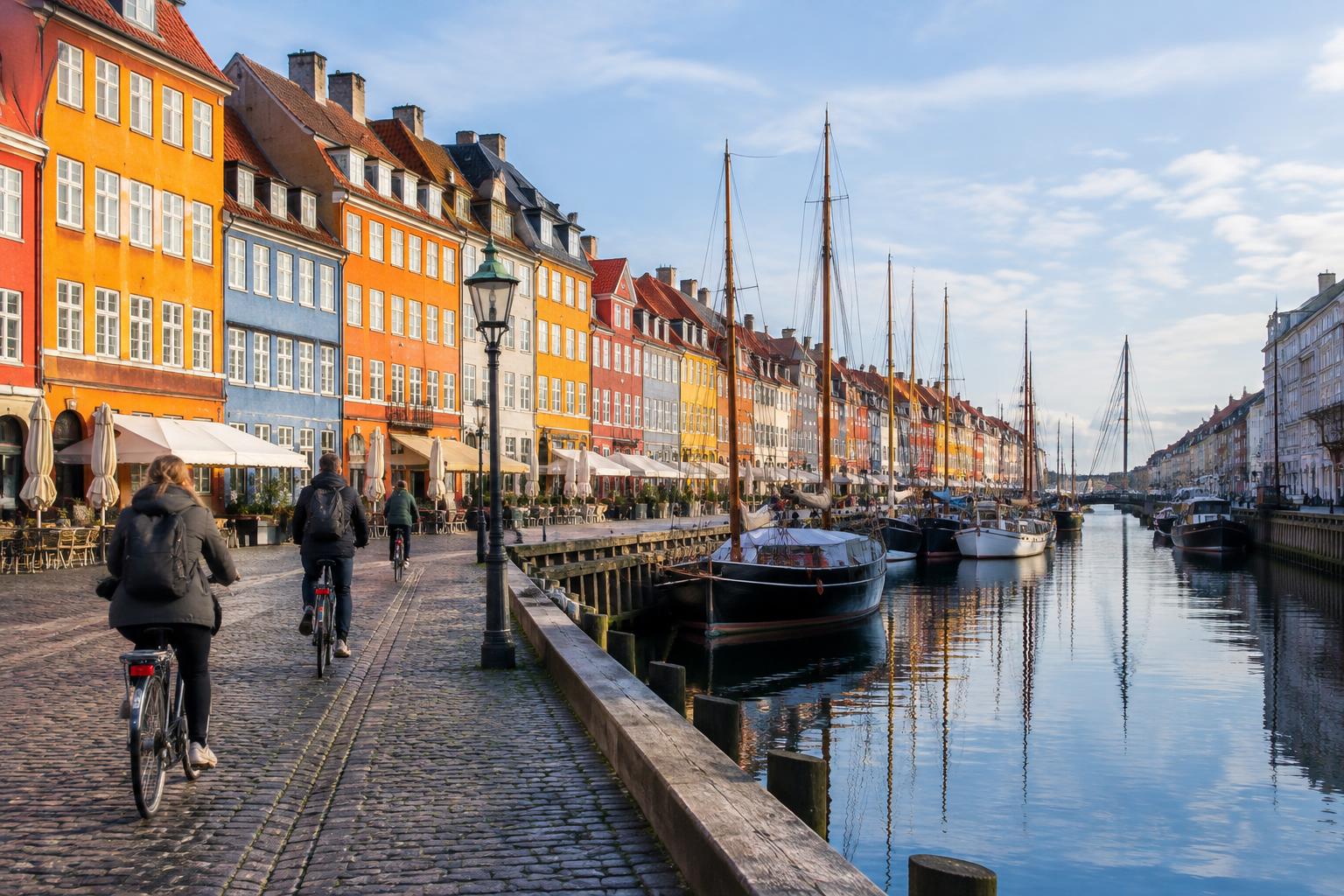
Nyhavn’s colourful harbour frontage costs nothing to walk and photograph (the expense comes only if you sit down at one of its waterside restaurants). The Free Town of Christiania can be explored on foot at no cost, with its own distinct, informally built character. Public parks including Kongens Have (the King’s Garden) and the grounds around Rosenborg Castle are free to enter, and the city’s harbour baths — floating public swimming spots along the cleaned-up harbour — are free to use in warmer months.
- Nyhavn harbour front — free to walk, photograph and people-watch
- Christiania — free entry, a distinctive self-governing neighbourhood
- Kongens Have and Rosenborg Castle grounds — free public park
- Harbour baths (Islands Brygge and others) — free public swimming in summer
- The Round Tower’s exterior and many church exteriors — free to view and photograph
Getting around cheaply
Copenhagen is famously flat and cycle-friendly, and renting a city bike for a day is usually cheaper than multiple single Metro or bus fares, as well as being a genuinely pleasant way to see the city. For those not cycling, a Rejsekort travel card or a short-term visitor travel pass covers Metro, bus and local train journeys more cheaply than buying individual tickets if making more than two or three journeys in a day.
Eating without the full restaurant price tag
Smørrebrød — open rye-bread sandwiches with toppings such as pickled herring, egg or roast pork — is a classic Danish lunch, and a version bought from a bakery, supermarket or a casual lunch counter costs a fraction of the same dish at a sit-down restaurant. Torvehallerne food market offers a wide range of stalls at prices generally lower than restaurant dining, and is a good way to sample Danish and international food without a full restaurant bill. Supermarkets such as Netto and Fakta are reliably inexpensive for picnic supplies to take to one of the harbour baths or parks.
Free or low-cost museum days
Several Copenhagen museums, including some national collections, offer free entry to their permanent collections or free admission on specific days — check each museum’s current policy directly, since these vary and change periodically. Where entry is paid, students and under-18s often receive discounted rates with valid ID.
A sample budget day
- Morning: rent a city bike and ride along the harbour from Nyhavn toward Christiania
- Midday: lunch from Torvehallerne market or a bakery smørrebrød
- Afternoon: free museum collection or a walk through Kongens Have
- Evening: picnic supplies from a supermarket, eaten at one of the harbour baths or a park bench with a view
A frugal Copenhagen trip still involves one or two splurges worth budgeting for deliberately — a proper restaurant meal, perhaps, or a paid museum that particularly interests you — but the city’s free public spaces do most of the heavy lifting for an enjoyable, affordable few days.
Where to stay without overspending
Vesterbro, just behind the main railway station, has shifted from a red-light district to one of Copenhagen's more affordable and increasingly fashionable areas, with hostels and budget hotels generally cheaper than equivalents in the city centre while still being walkable to Tivoli Gardens and the harbour. Nørrebro, a multicultural neighbourhood slightly further out, tends to offer the lowest accommodation prices of the central districts along with good food options, reached easily by bike or a short Metro ride. Staying slightly outside the absolute centre and relying on a bike or the efficient Metro to reach sights usually saves meaningfully on accommodation without adding much practical travel time.
A sample daily budget
- Budget hostel or simple hotel room: roughly £50–£75 a night
- City bike rental for the day: roughly £12–£15
- Smørrebrød lunch from a bakery or market stall: roughly £6–£9
- Supermarket picnic dinner: roughly £6–£10
- One paid museum or attraction: roughly £12–£18
Common budget mistakes in Copenhagen
The most common mistake is treating Copenhagen like a city where sit-down meals are unavoidable; defaulting to restaurant dining for every meal is what drives most visitors' budgets far over expectations, when bakery and supermarket options are both plentiful and genuinely good. Another is buying the Copenhagen Card without checking it against an actual itinerary, since it only pays off with enough paid sightseeing to offset its cost. Renting a car or relying heavily on taxis is also an unnecessary expense in a city this flat and well served by bikes and public transport — the savings from cycling instead are considerable over even a few days.
Seasonal timing and its effect on cost
Shoulder-season months — May, early June, and September — offer a reasonable balance between pleasant weather and lower accommodation prices than the height of summer, when Scandinavian school holidays and peak tourist season push hotel rates noticeably higher. The harbour baths and many outdoor food markets operate only in the warmer months, so a visit timed for late spring or early autumn still captures most of the free, open-air appeal without the steepest summer prices. Winter visits are the cheapest for accommodation but lose the harbour swimming and much of the outdoor market activity, trading lower costs for a quieter, more indoor-focused trip built around museums, cafés and the city's famous hygge atmosphere.
Accommodation strategy beyond the city centre
Beyond Vesterbro and Nørrebro, staying in Frederiksberg, a largely residential area that sits almost entirely within Copenhagen's urban footprint despite technically being its own municipality, can offer a further step down in accommodation price while remaining a short bike ride or Metro journey from the centre. Hostels with private rooms, rather than full hotels, are widely available across these neighbourhoods and often undercut even modest hotel pricing considerably, while still offering the privacy most travellers want for a multi-night stay. Booking several weeks ahead rather than at the last minute also tends to secure noticeably better rates in Copenhagen than in cities with more volatile, demand-driven pricing.
Finally, travelling with a reusable water bottle is a small but genuine saving in Copenhagen, where tap water is high quality and safe to drink everywhere, and bottled water in cafés or kiosks is priced at a level that adds up quickly across a multi-day visit for little real benefit.
Check before you go
Compare the Copenhagen Card’s price against the entry fees for the specific sights you plan to visit, and check current bike rental and public transport ticket prices before arrival.
Sources and official information
- VisitDenmark – official tourism board
- Copenhagen Card – official site
- DOT (Rejseplanen) – public transport
Prices and timetables are approximate and change often. Spotted an error? Tell us — corrections are noted under our editorial policy.
About the author
Daniel ReyesPlanning & slow travel editor. Daniel writes and edits the trip planning and slow travel sections: budgets, packing, documents, connectivity, rail travel and longer stays.
Related guides
Slow Travel
Budapest’s Thermal Baths on a Budget
Budapest sits on a vast thermal spring system, and its public baths remain genuinely affordable. Here is how to choose one and keep costs down.
By Daniel Reyes · 5 min read
Slow Travel
Slow Travel on a Normal Budget: Sample Costs for a Longer, Calmer Trip
Slow travel does not require a sabbatical or a large budget. Here is how to plan a longer, unhurried trip with realistic sample budgets for everyday travellers.
By Daniel Reyes · 6 min read
Food & Markets
Vienna’s Coffee House Culture, Explained
How to navigate Vienna’s historic coffee houses, recognised by UNESCO, from ordering etiquette to classic coffee styles and pastries.
By Yasmine Benali · 5 min read