Navigating the Marrakech Medina Without a Guide
Practical orientation strategies for exploring Marrakech’s medina independently, using landmarks, named gates and Jemaa el-Fnaa as an anchor.
By Marta Oliveira · Published 8 December 2025 · Updated 20 January 2026 · 5 min read
At a glance
- The medina’s lanes are not laid out on a grid — expect to get briefly lost
- Jemaa el-Fnaa and the Koutoubia Mosque minaret are the two most reliable anchors
- Offers to ‘guide you back’ from strangers are often informal paid services
- Early morning and dusk are the calmest and most vivid times to walk
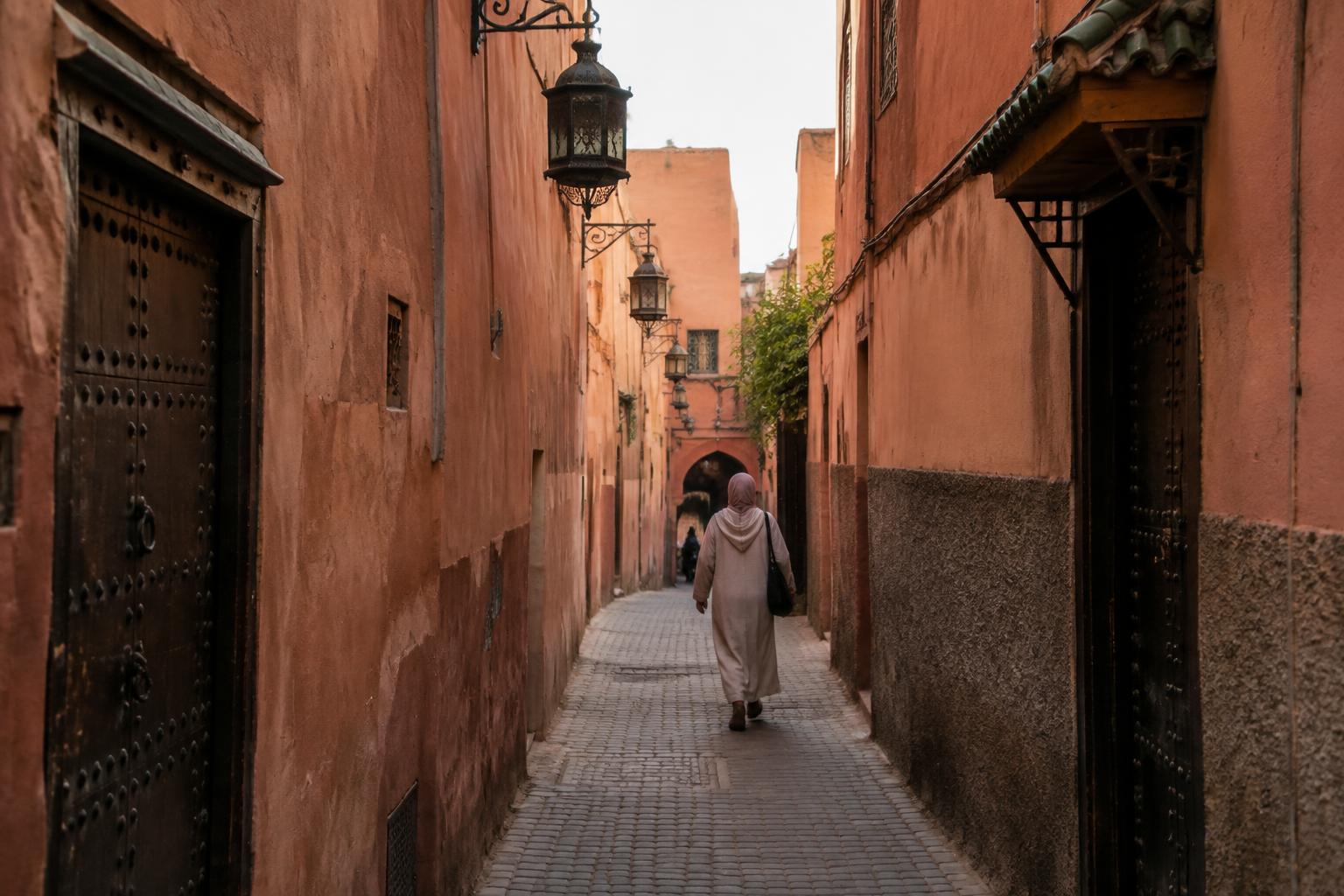
Marrakech’s medina, a UNESCO World Heritage Site since 1985, was never built on a grid, and no amount of map-reading fully prepares a first-time visitor for how quickly a sense of direction dissolves inside it. That is not a flaw to be engineered around so much as a feature to plan for.
Use the Koutoubia minaret as your compass
The minaret of the Koutoubia Mosque, at roughly 77 metres, is visible from many points across the medina and the nearby new town, and remains the single most reliable visual anchor for reorienting yourself without a phone. Jemaa el-Fnaa, the main square, sits a short walk north-east of it, and most of the medina’s souks fan out north from the square in a loosely organised pattern — textiles, leather, metalwork and spices each tend to cluster in roughly their own zone, a layout that dates back centuries.
Expect to get lost, and plan for it
Offline maps help far less here than in European old towns, because many of the narrower derbs (alleyways) are unnamed or inconsistently labelled on mapping apps. The more realistic approach is to accept short periods of disorientation as part of the experience, and to carry a hotel or riad business card with the address in both French and Arabic script, which can be shown to a shopkeeper or shown to a taxi if needed.
- Carry your riad’s business card with the address in Arabic script
- Note the nearest of the medina’s historic gates (babs) to your accommodation
- Keep the Koutoubia minaret or Jemaa el-Fnaa in mind as a fallback destination
- Agree a taxi fare before getting in, since meters are inconsistently used
Be wary of unsolicited ‘guidance’
It is common for visitors who look lost to be approached by someone offering to walk them to their destination or to a specific shop; this is typically an informal paid service, and a tip or small payment is usually expected at the end even if not stated upfront. Politely declining and continuing to walk, or asking a shopkeeper in a fixed-premises stall rather than someone on the street, tends to be a more straightforward way to get reliable directions.
Timing changes the medina completely
Early morning, before around 9am, the medina’s lanes are quiet, deliveries are being made by handcart, and it is the best time to appreciate the architecture without the density of midday crowds. By late afternoon the souks are at their busiest, and by dusk Jemaa el-Fnaa itself transforms as food stalls, storytellers and musicians set up — a change dramatic enough that visiting the square at both times of day is worth building into any itinerary.
Know the gates (babs) nearest your riad
The medina’s old defensive walls are pierced by numerous historic gates, including Bab Agnaou and Bab Doukkala, and these function as useful large-scale landmarks even when the smaller lanes between them are disorientating. Many riads give directions relative to the nearest bab rather than a street address, which is worth asking about at booking.
Practical safety notes
The medina is generally safe for pedestrians during the day, though narrow lanes are shared with mopeds and handcarts moving faster than their width suggests, and keeping to the side rather than the centre of a lane is a sensible habit. At night, sticking to well-lit, busier routes near Jemaa el-Fnaa rather than cutting through quieter residential derbs is the more cautious approach.
Money, haggling and paying for things
Most medina transactions, from taxis to souvenirs, still involve some negotiation, and prices are rarely fixed except in state-run cooperative shops (Ensemble Artisanal) which display set prices and are a useful benchmark before negotiating elsewhere. A common approach is to decide privately what an item is worth to you, offer roughly half the first quoted price, and work towards a figure you are comfortable with rather than trying to ‘win’ the negotiation outright. Carrying small-denomination dirham notes matters more here than almost anywhere else in Morocco, since changing a large note in a small stall can itself become a negotiation.
- Check indicative prices at an Ensemble Artisanal cooperative shop first
- Carry small dirham notes and coins rather than large denominations
- Agree a price before an item is wrapped or a service is rendered
- Cash remains more useful than cards inside the medina's smaller stalls
Where the medina connects to the new town
Guéliz, Marrakech's French-built new town, sits west of the medina and is where many restaurants, cafes and boutiques with fixed prices are concentrated, offering a useful contrast and a break from negotiation-heavy shopping. Avenue Mohammed V is the main artery linking the two areas, and walking it end to end is a straightforward, well-signed route that avoids the need to navigate the medina's smaller lanes at all. A petit taxi between the medina and Guéliz is inexpensive and a sensible option after dark.
Food and drink inside the medina
Jemaa el-Fnaa's night food stalls, numbered and licensed, are the most visible dining option, but quality and hygiene standards vary between stalls, and choosing one that is busy with local customers rather than empty is a reasonable rule of thumb. Rooftop cafes overlooking the square, reached via unmarked staircases just off it, offer a quieter vantage point to eat and watch the square below without the stall-side crowding. Mint tea, poured from height in the traditional style, is offered widely and often free when visiting a carpet or textile shop, though this does not obligate a purchase.
A realistic half-day route for a first visit
For a first orientation walk, start at Jemaa el-Fnaa in the mid-morning, head north into the souks following signs toward the Ben Youssef Madrasa, a restored 16th-century Islamic college open to visitors, then loop back via the Mouassine neighbourhood's smaller artisan streets rather than retracing the same route. This creates a rough circuit of roughly two hours that touches several souk zones without venturing so far into the unnamed derbs that reorientation becomes difficult.
What to wear and basic cultural etiquette
Modest dress, covering shoulders and knees, is advisable for both men and women inside the medina, not strictly for religious reasons but because it noticeably reduces unwanted attention and is generally more comfortable for entering smaller shops and riads. Fridays are a notable exception to the medina's usual rhythm, since many shops close or reduce hours around midday prayers, and planning souk shopping around this is worth doing in advance.
Public holidays and the month of Ramadan also shift medina rhythms considerably, with many stalls opening later and the evening hours around Jemaa el-Fnaa becoming livelier after sunset, so checking the Islamic calendar against travel dates is a useful planning step.
- Orient using the Koutoubia minaret and Jemaa el-Fnaa as fixed points
- Carry your accommodation’s address in Arabic script
- Decline unsolicited guiding offers politely and ask fixed-premises shopkeepers instead
- Visit the medina both early morning and at dusk to see two different versions of it
Check before you go
Confirm your riad’s exact location relative to the nearest named gate (bab) before arrival, and check the Moroccan National Tourist Office site for any current local guidance.
Sources and official information
Prices and timetables are approximate and change often. Spotted an error? Tell us — corrections are noted under our editorial policy.
About the author
Marta OliveiraCity guides editor. Marta edits Caesar Plaza’s city guides, covering walking routes, public squares, neighbourhoods and public transport.
Related guides
City Guides
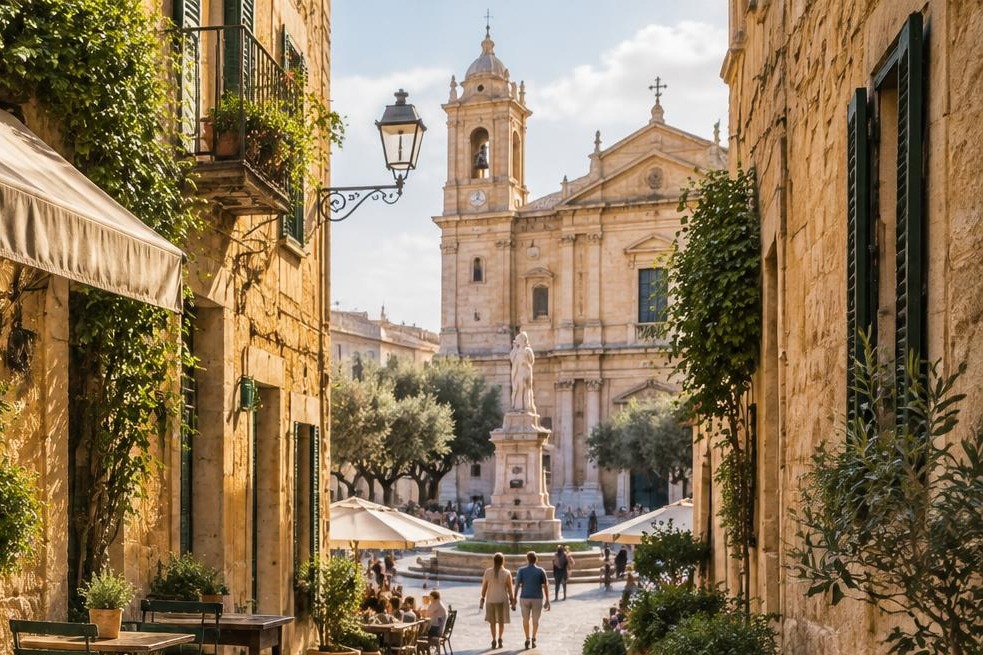
Walking a New City Safely: Practical Habits That Actually Work
Sensible, specific habits for walking unfamiliar cities confidently, with real examples from Lisbon, Paris, Marrakech and Istanbul.
By Marta Oliveira · 5 min read
City Guides
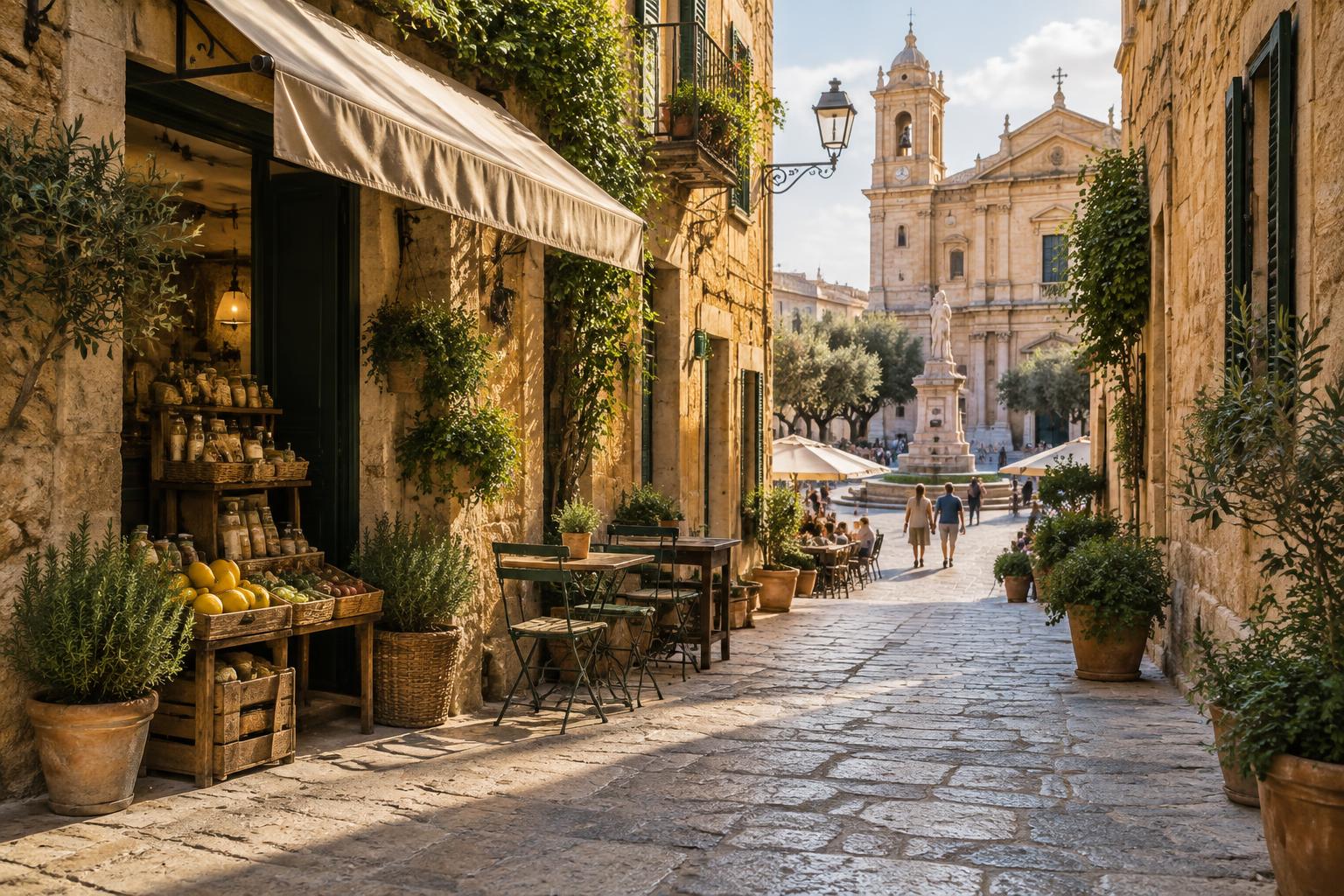
How to Read a City Square: A Traveller’s Guide to Public Space
Learn to read the layout, rhythm and history of great European and North African squares, from Lisbon’s Praça do Comércio to Marrakech’s Jemaa el-Fnaa.
By Marta Oliveira · 5 min read
Food & Markets
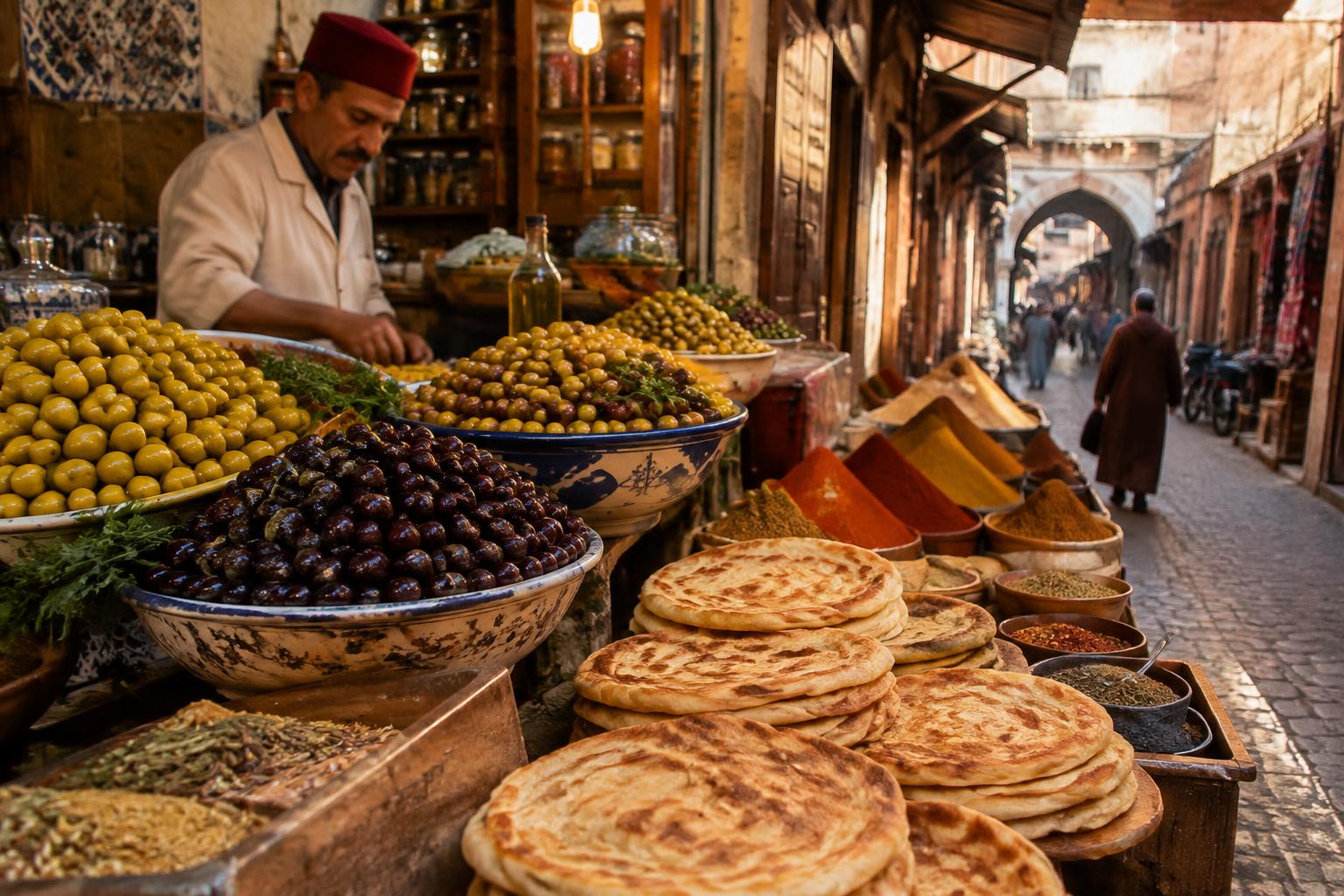
A Food Walk Through the Fes Medina
How to eat well in the Fes el-Bali medina, Morocco’s oldest walled city, from bread ovens and tanneries to spice stalls and street snacks.
By Yasmine Benali · 5 min read