A Food Walk Through the Fes Medina
How to eat well in the Fes el-Bali medina, Morocco’s oldest walled city, from bread ovens and tanneries to spice stalls and street snacks.
By Yasmine Benali · Published 21 November 2025 · Updated 15 January 2026 · 5 min read
At a glance
- Fes el-Bali is a UNESCO World Heritage Site and one of the largest car-free urban areas in the world
- Communal neighbourhood bread ovens (farrans) still bake dough brought by local households
- Mint tea is offered widely and politely accepting a small glass is customary
- A local guide is genuinely useful for first-time navigation, not just for colour
The Fes medina, formally Fes el-Bali, was inscribed as a UNESCO World Heritage Site in 1981 and remains one of the largest car-free urban zones in the world, its narrow alleys navigated on foot or by donkey and handcart. Food is woven into the fabric of the medina in ways that reward slow, attentive walking rather than a fixed checklist of dishes.
Starting at a neighbourhood bread oven
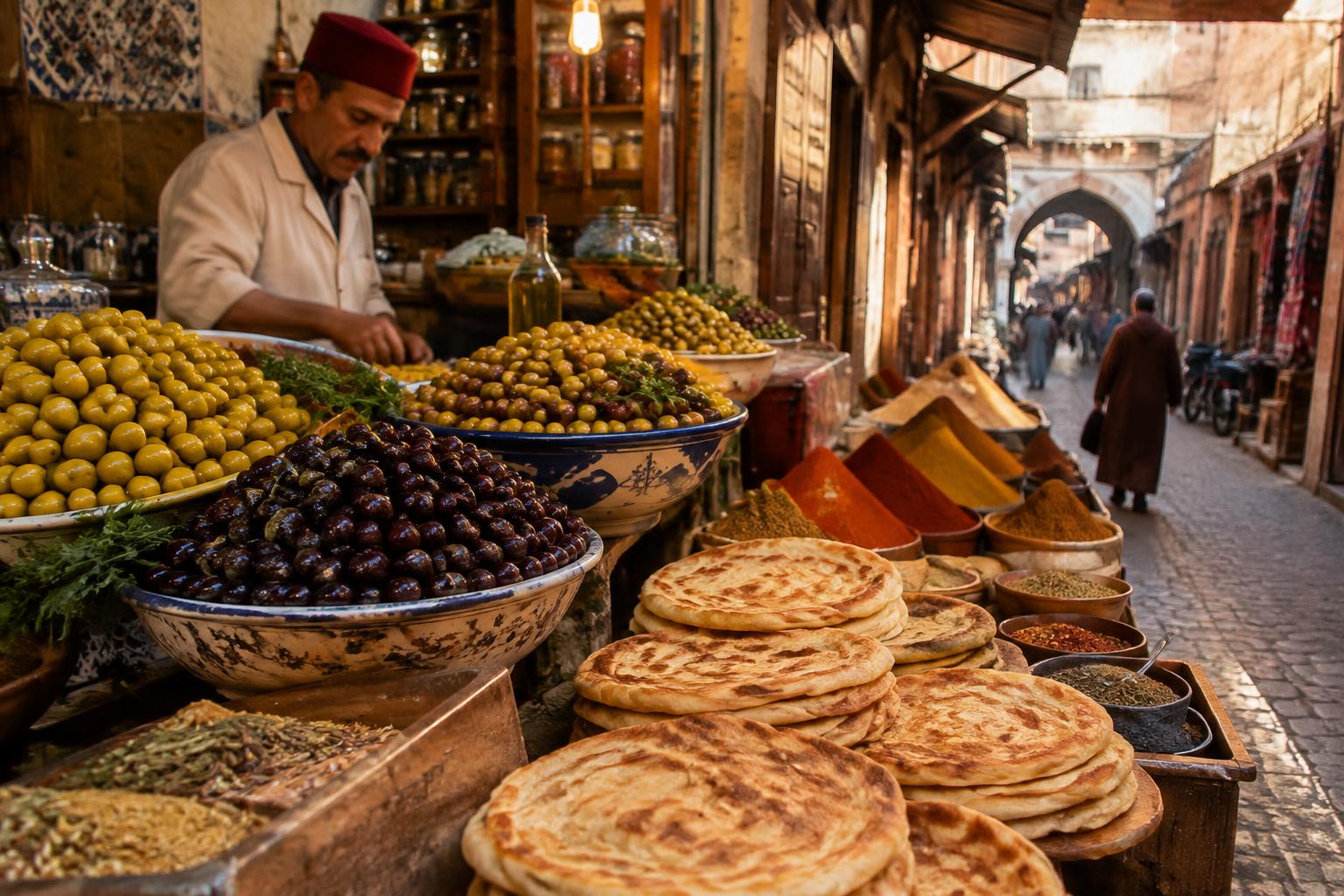
Many medina neighbourhoods still operate a communal wood-fired oven, or farran, where households bring dough prepared at home to be baked for a small fee, a system that predates modern domestic ovens and persists because it still works well. Watching this exchange, usually in the morning, is a good first stop and a clear example of how the medina’s infrastructure supports everyday food habits rather than tourism.
The spice and produce stalls
Spice merchants in the medina display cones of paprika, cumin, turmeric and ras el hanout (a complex spice blend whose composition varies by seller), often alongside preserved lemons, olives and dried fruit. Produce stalls selling vegetables and fruit are generally found in dedicated sections of the medina, separate from the spice and leather districts, and tend to be busiest in the morning.
- Ras el hanout — a spice blend used widely in tagines and couscous, composition varies by merchant
- Preserved lemons — a Moroccan staple used in tagines, commonly sold loose by weight
- Msemen and harcha — griddled flatbreads sold as street snacks, often with honey or cheese
- Mint tea — green tea with fresh mint and sugar, offered as a gesture of hospitality as much as a drink
Near the tanneries
The Chouara Tannery is one of the medina’s best-known sights, and the surrounding streets have food stalls and small cafés catering to both workers and visitors. The smell near the tanneries is strong; vendors there sometimes offer fresh mint to hold while viewing the terraces, a practical as much as hospitable gesture.
Street snacks worth trying
Beyond sit-down meals, the medina’s alleys are good for grazing: look for small stalls selling fried snacks, grilled meat skewers (brochettes), and seasonal fruit juices. As with markets anywhere, stalls with visible turnover and queues of local customers are generally the safer and better choice.
Finding your way, and when to use a guide
The medina’s layout, with over 9,000 narrow lanes by some estimates, is genuinely disorienting for first-time visitors, and mobile data signal can be unreliable in the densest sections. A licensed local guide for a first morning is a practical investment rather than a tourist indulgence, and can open doors — sometimes literally, into otherwise unmarked bakeries or workshops — that would be hard to find independently.
- Book a licensed guide for your first visit, arranged through your riad or Morocco’s national tourism office
- Start at a bread oven or spice stall in the morning when the medina is calmer
- Graze on street snacks through the day rather than committing to one large meal
- Carry small-denomination dirhams, as most stalls don’t take cards
Food safety and water
As with much of Morocco, tap water in Fes is best avoided for drinking by visitors; bottled water is widely available and inexpensive. Hot, freshly cooked food and well-peeled fruit are generally lower risk than anything that may have sat at room temperature for an extended period.
Dinner: riad versus restaurant
Many visitors staying in a traditional riad will be offered a home-style evening meal cooked on site, often a tagine or couscous prepared that day, which can be an excellent and convenient option, particularly on a first night when medina navigation after dark feels daunting. On other nights, a handful of medina restaurants, often in restored historic houses, serve more elaborate multi-course Moroccan menus aimed partly at visitors; these are generally reliable but priced higher than a riad’s home cooking or a simple street meal.
Hammams and the food day
A traditional hammam (bathhouse) visit is often paired, informally, with food in daily medina life — many residents visit a hammam in the late afternoon before the evening meal. Visitors curious about this rhythm can follow the same pattern: a hammam session in the afternoon, followed by mint tea and a light evening meal, rather than treating the two as unrelated activities.
Bargaining for spices and dry goods
Unlike fresh produce, which is generally sold at a fairly fixed price per kilo, spices, preserved goods and non-perishable items at medina stalls are more open to negotiation, particularly for larger quantities. A polite opening approach is to ask the price, counter with a lower figure roughly 30–40% below the asking price, and settle somewhere in the middle; the process is expected and generally good-natured rather than adversarial.
A sample half-day food walk
- 9am: enter through Bab Boujloud and walk towards a neighbourhood bread oven to watch the morning baking exchange
- 9.45am: browse spice stalls, buying a small amount of ras el hanout or preserved lemons
- 10.30am: stop for msemen or harcha with honey at a street stall
- 11.30am: walk towards the Chouara Tannery area, accepting mint if offered
- 1pm: lunch at a small medina restaurant or stall serving tagine or couscous, depending on the day of the week
Friday: a different rhythm
Couscous is traditionally the Friday lunch dish across much of Morocco, including Fes, tied to the day’s significance in the Islamic week; some smaller stalls and restaurants adjust their offerings accordingly, and couscous may be more widely available, and other dishes less so, on Fridays than on other days.
Buying spices to take home
Spices bought loose at medina stalls generally travel well if properly sealed; ask the vendor for a vacuum-sealed or double-bagged portion if available, and be aware that some countries restrict importing certain seeds or plant material, so it’s worth checking destination customs rules for anything beyond common ground spices. Buying smaller quantities more often retains better flavour than one large bag that sits for months.
A note on photography
Many stallholders are happy to be photographed, but it is considerate to ask first, particularly for close portraits rather than wide shots of a stall or alley. A small purchase before asking to photograph a vendor's stall is a reasonable and appreciated courtesy, and tends to produce a warmer response than a camera raised without any prior interaction.
Combining the food walk with other medina sights
A food-focused morning pairs naturally with visits to the Al-Attarine and Bou Inania madrasas and the university library, all within walking distance of the main food streets; spacing these out across a stroll, rather than treating food and monuments as separate outings, suits the medina’s compact, interwoven layout.
A living market, not a museum
What distinguishes the Fes medina’s food scene is that it still primarily serves the people who live and work within its walls; visitors are welcome, but the ovens, spice stalls and tea rituals existed, and will continue, independent of tourism.
Check before you go
Check current UK or equivalent government travel advice for Morocco before travelling, and confirm with your accommodation whether a licensed guide is recommended for medina navigation.
Sources and official information
- UNESCO World Heritage, Medina of Fez
- Office National Marocain du Tourisme (Visit Morocco)
- UK Foreign, Commonwealth & Development Office travel advice, Morocco
Prices and timetables are approximate and change often. Spotted an error? Tell us — corrections are noted under our editorial policy.
About the author
Yasmine BenaliFood & markets editor. Yasmine covers food and markets: how to shop a morning market, eat well in a town you do not know, and approach street food sensibly.
Related guides
City Guides
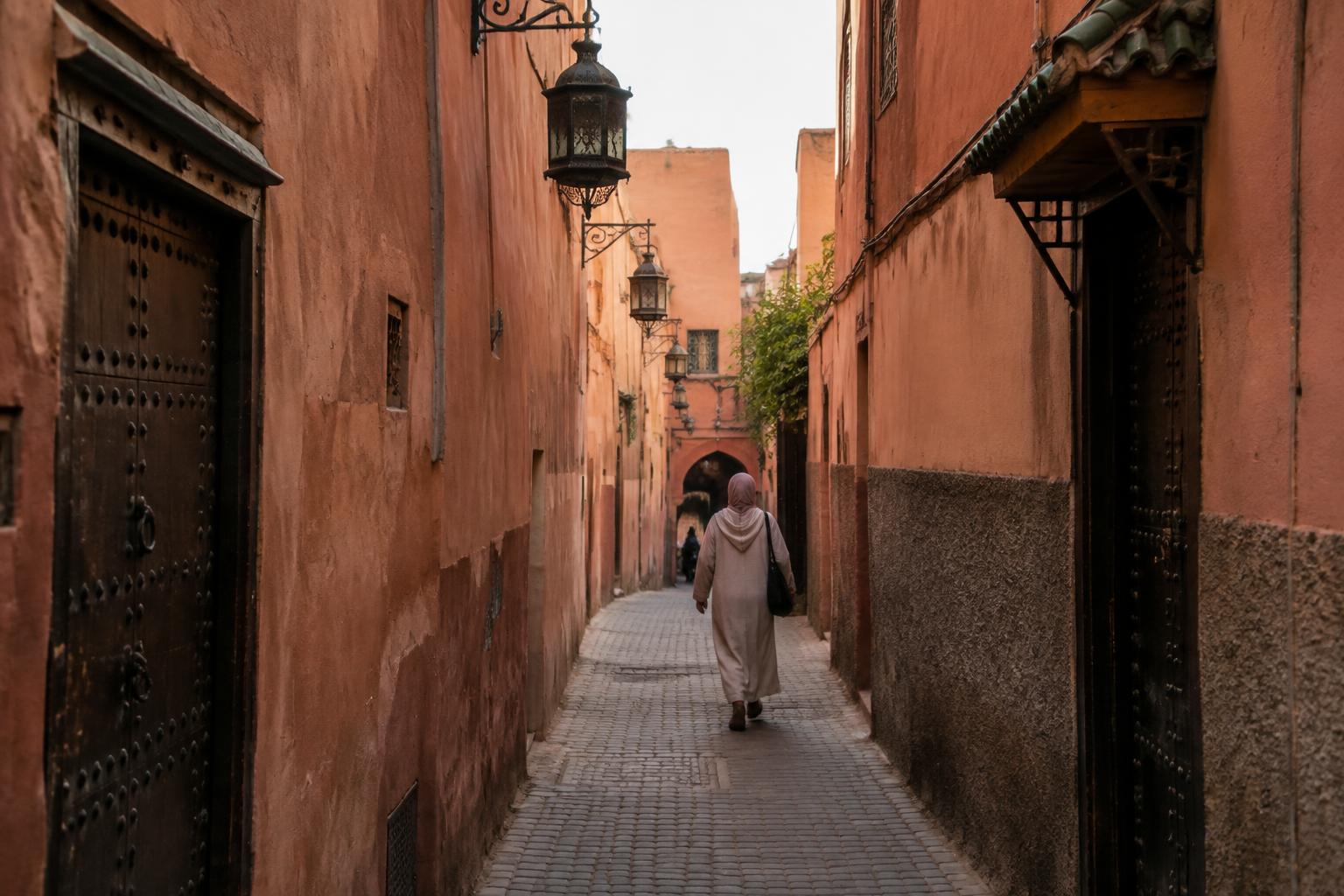
Navigating the Marrakech Medina Without a Guide
Practical orientation strategies for exploring Marrakech’s medina independently, using landmarks, named gates and Jemaa el-Fnaa as an anchor.
By Marta Oliveira · 5 min read
Food & Markets
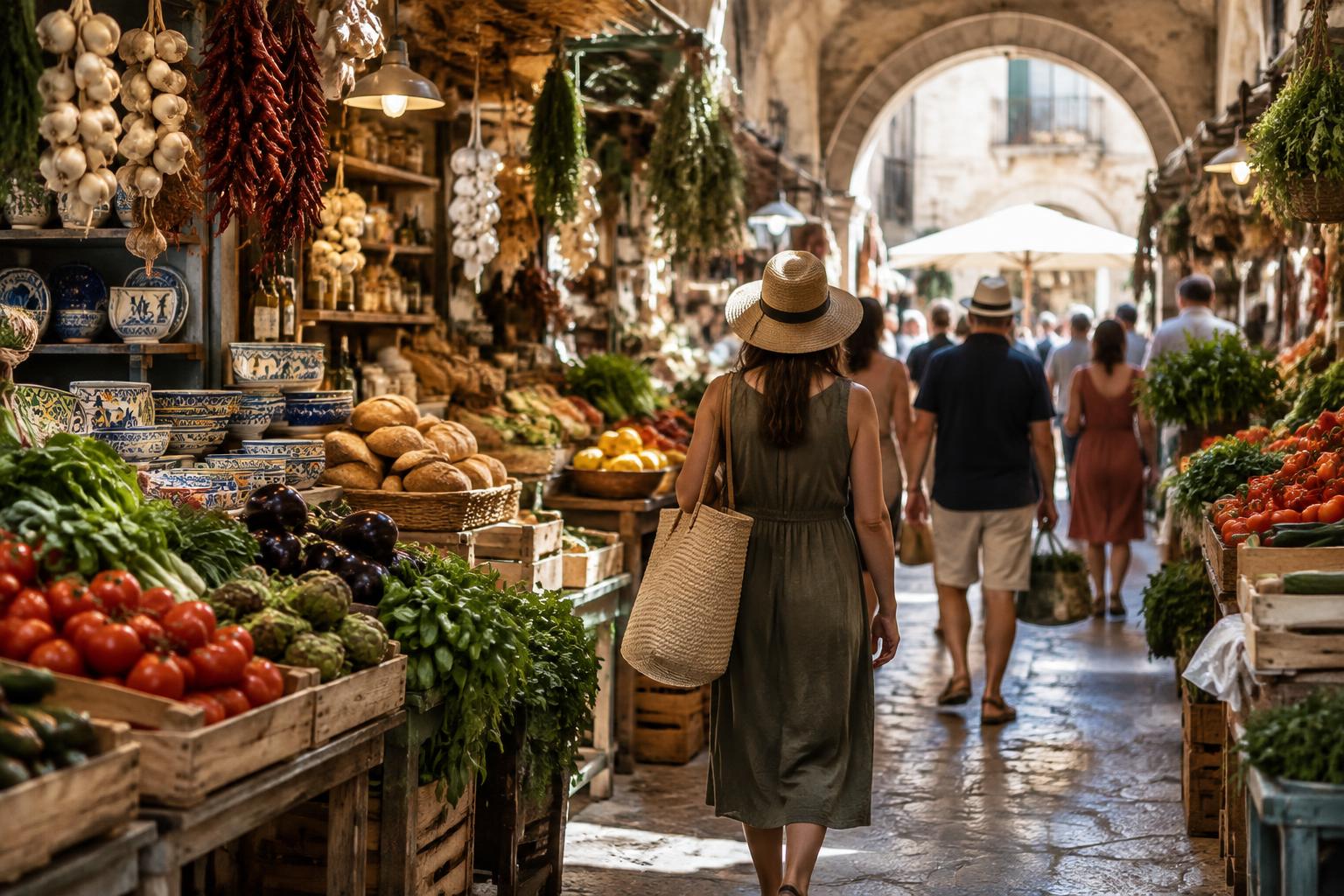
Eating Well in a Town You Don’t Know
A practical method for finding good, honest food in an unfamiliar town, from reading a market stall to spotting a kitchen that cooks for locals.
By Yasmine Benali · 6 min read
Food & Markets
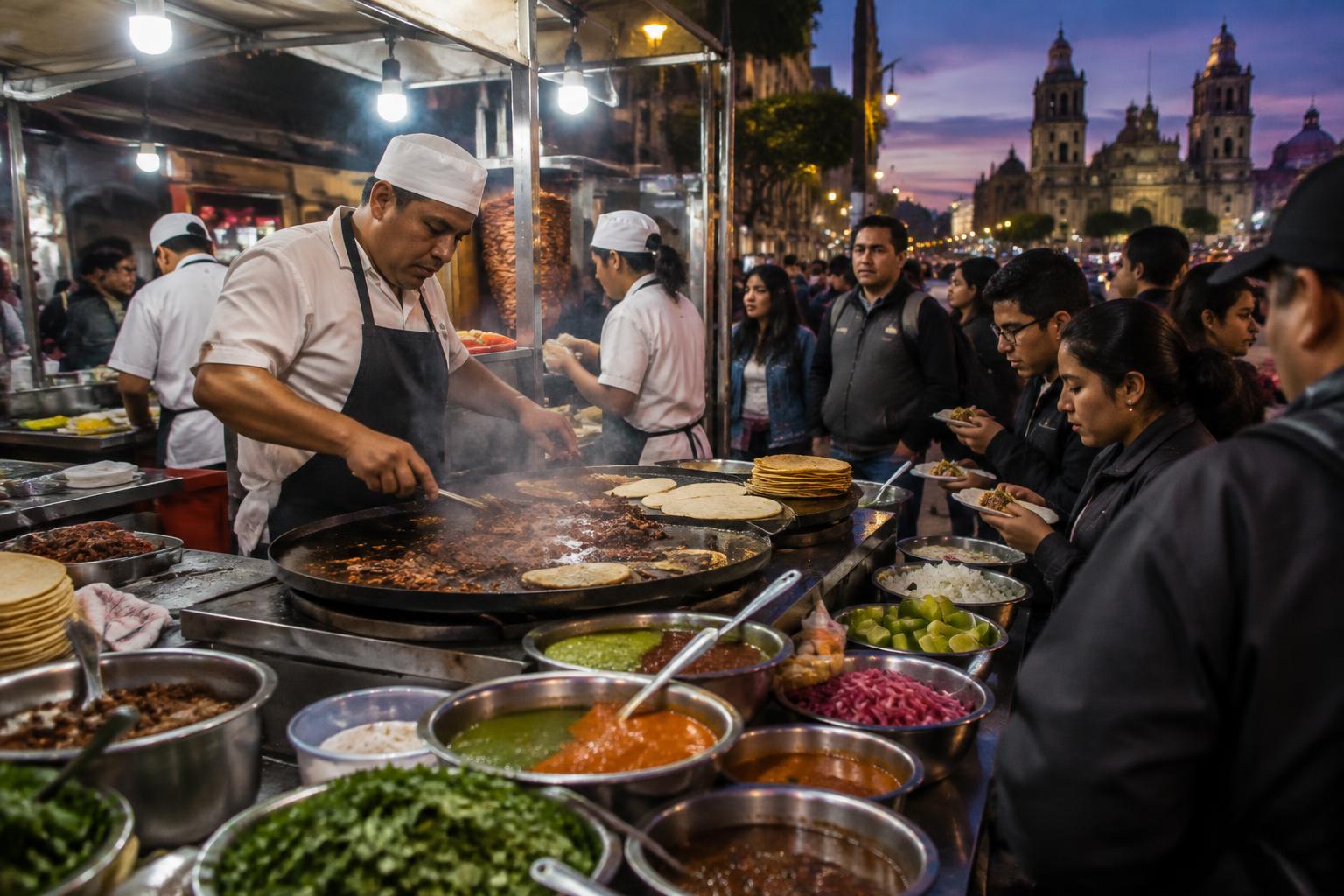
Mexico City Street Food: Eating Well and Staying Well
Practical food safety guidance for enjoying Mexico City’s street food scene, from taco stands to mercados, without unnecessary risk.
By Yasmine Benali · 6 min read