Mexico City Street Food: Eating Well and Staying Well
Practical food safety guidance for enjoying Mexico City’s street food scene, from taco stands to mercados, without unnecessary risk.
By Yasmine Benali · Published 18 December 2025 · Updated 20 March 2026 · 6 min read
At a glance
- Mexico City’s street food is generally safe when a few selection habits are followed
- Favour stalls with a visible queue of local customers and a high turnover of food
- Avoid tap water and ice from unknown sources; stick to bottled or sealed drinks
- Carry basic travel health items; mild stomach upset is still possible even with care
Mexico City has one of the world’s great street food cultures, and tacos, tortas and antojitos sold from stands and mercados are central to how the city eats, not a lesser alternative to restaurants. Eating well here safely is largely about applying a few consistent habits rather than avoiding street food altogether.
Choosing a stand
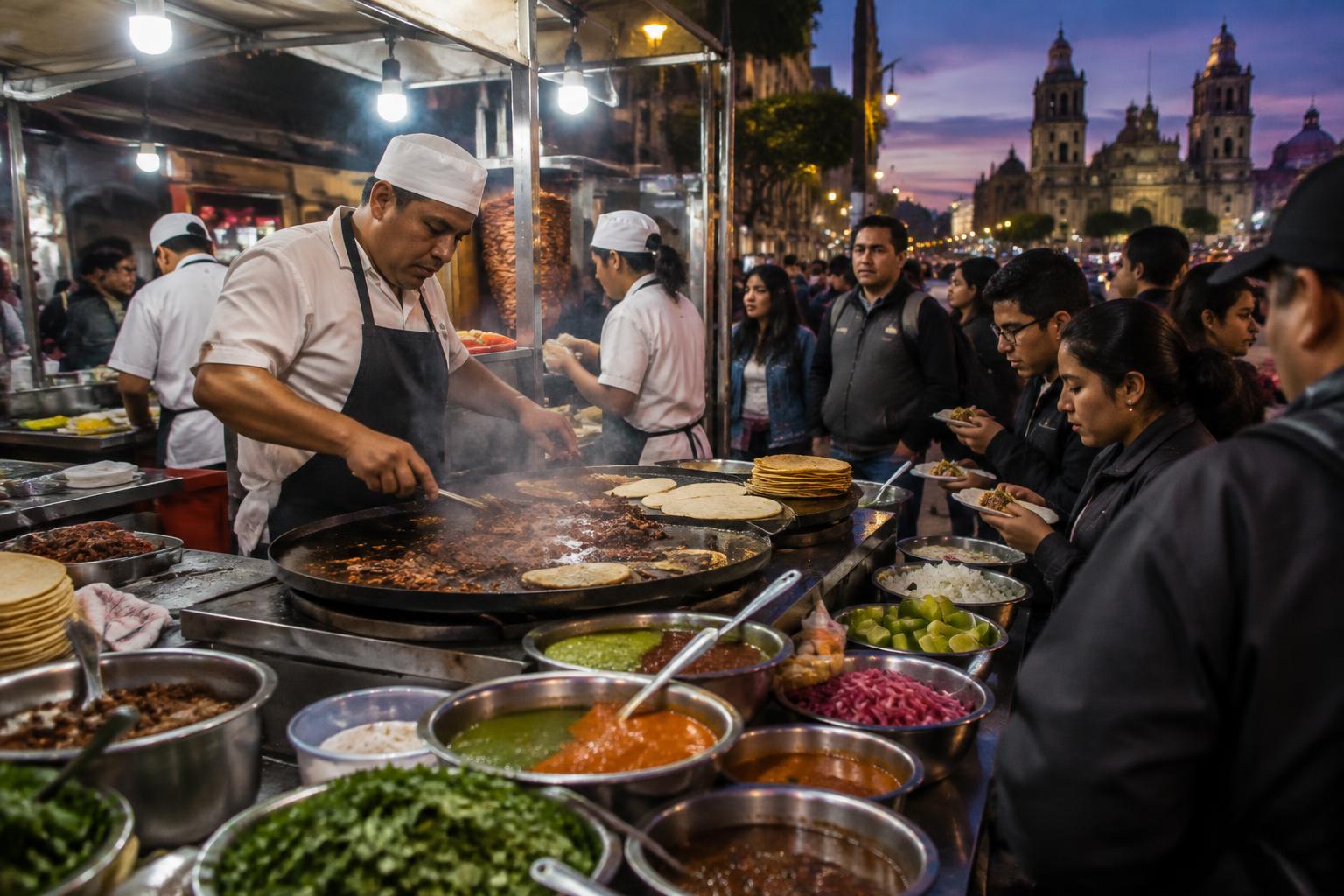
The single most useful habit is watching for turnover and local custom. A taco stand with a steady queue of local office workers or families at lunchtime is cooking and selling food quickly, which reduces the time ingredients sit at room temperature. A stand with food sitting untouched for a long period, regardless of how appealing it looks, carries more risk.
- Prefer stands cooking meat to order on a visible griddle (comal) rather than reheating pre-cooked portions
- Watch that raw and cooked ingredients are kept separate on the preparation surface
- Choose stands using disposable or clearly washed tongs and utensils
- Be cautious of garnishes like raw salsas or chopped onion left uncovered for long periods, though most well-trafficked stands turn these over quickly too
Water and ice
Tap water in Mexico City is not generally recommended for drinking by visitors; bottled or purified water is widely available and inexpensive, and most reputable restaurants and stands use purified water and ice (hielo purificado) for drinks. It’s reasonable to ask whether ice is purified if unsure, particularly at smaller stands.
Markets worth visiting
Mercado de San Juan, in the historic centre, is known for more unusual ingredients, including some exotic meats, and a food hall of counters popular with both locals and visitors. Mercado de Coyoacán, in the Coyoacán neighbourhood, is a good stop for tostadas and is set within one of the city’s most pleasant areas for walking afterwards. Both operate primarily as genuine neighbourhood markets rather than tourist-only attractions.
What to try
- Tacos al pastor — marinated pork cooked on a vertical spit, a Mexico City speciality with Lebanese immigrant origins
- Tlacoyos — oval masa cakes filled with beans or cheese, cooked on a comal and topped with salsa and nopales
- Esquites or elotes — corn served in a cup or on the cob with mayonnaise, cheese, chilli and lime
- Tortas — filled sandwiches on a crusty roll, often sold alongside taco stands
General food safety habits
Standard travel health guidance applies here as elsewhere: wash or sanitise hands before eating, be cautious with raw unpeeled produce of uncertain origin, and consider carrying oral rehydration salts in case of mild stomach upset, which remains possible even for cautious eaters simply due to differences in local food flora. Official travel health sources, including national travel health agencies, publish destination-specific guidance for Mexico worth reviewing before a trip.
Altitude and spice tolerance
Mexico City sits at over 2,200 metres above sea level, and some visitors notice they feel the effects of alcohol more quickly or tire more easily in the first day or two; this is unrelated to food safety but worth knowing when pacing a day of market-hopping and street food. Chilli heat in salsas varies significantly by stand, and it’s entirely acceptable to ask how spicy something is before committing.
Cost in 2026
As of 2026, street tacos in Mexico City typically cost approximately 15 to 30 Mexican pesos each, meaning a generous lunch of several tacos plus a drink commonly comes to well under the cost of a sit-down restaurant meal, though prices are somewhat higher in heavily touristed areas such as parts of Roma and Condesa.
Mercado de la Merced
One of the largest traditional markets in Mexico City, La Merced in the historic centre sprawls across several buildings and sections, selling everything from fresh produce and meat to prepared food and household goods. It is busier, less visitor-oriented and more overwhelming than San Juan or Coyoacán, making it a good choice for travellers who want an unfiltered look at how the city shops, though it rewards going with a specific destination in mind rather than wandering without a plan given its size.
Insects and unusual proteins
Chapulines (toasted grasshoppers, typically seasoned with chilli and lime) and other insect-based snacks are a genuine part of Oaxacan and central Mexican food tradition, sold at several Mexico City markets including San Juan, rather than a novelty aimed purely at visitors. They are generally well-tolerated food safety-wise, since they’re dried or toasted rather than raw, and are a reasonable thing to try from a busy, reputable stall.
Vegetarian and vegan street food
Strict vegetarians should be aware that many classic-looking vegetable dishes, including some bean and vegetable fillings, may be cooked with lard or meat-based fat for flavour; asking directly (‘¿tiene manteca?’ — does it have lard?) is a reasonable and commonly understood question. That said, genuinely plant-based options are easy to find, including esquites and elotes (ask for no mayonnaise if avoiding dairy), quesadillas with squash blossom or mushroom, and tlacoyos with bean filling, which is traditionally vegetarian.
A sample taco crawl route
- Late morning: tlacoyos or quesadillas at a market stall in Coyoacán, followed by a walk around the plaza
- Early afternoon: tacos al pastor at a busy stand with a visible trompo (vertical spit) and a steady local queue
- Mid-afternoon: esquites or elotes from a street cart as a snack between meals
- Evening: tacos de canasta or a torta from a stand near a metro station, where turnover is typically highest
Reading a stand’s setup
Beyond queue length, a few physical details are worth noting: a working stand typically has a clean, actively used griddle, a visible supply of fresh garnishes being replenished rather than sitting depleted, and a vendor handling raw meat and ready-to-eat garnishes with separate utensils. These small operational signs are generally a better predictor of safety than appearance or price alone.
Pairing drinks sensibly
Pulque and mezcal are both traditional Mexican drinks worth trying, generally from reputable, established venues rather than informal street sellers, given that quality and production standards vary considerably more for these than for bottled beer or wine. Craft beer and good tequila are widely available at reasonable prices and are a safe, straightforward pairing with street food for visitors who’d rather not experiment with less familiar drinks immediately.
A seasonal note on produce
Mexico City’s street food changes somewhat with the seasons: corn-based dishes like esquites and elotes are available year-round but at their best from late summer into autumn when corn is freshest, while certain fruit-based aguas frescas shift with whatever fruit is cheapest and most abundant that month. Asking a vendor what’s freshest that day often produces a better result than ordering a fixed favourite regardless of season.
Combining markets with neighbourhood walks
Both San Juan and Coyoacán sit within pleasant walking neighbourhoods, making it easy to pair a market visit with a longer stroll; Coyoacán in particular rewards lingering afterwards around its central plazas, well away from the market’s own food stalls.
Confidence, not caution, is the goal
Avoiding Mexico City’s street food out of general caution means missing much of what the city does best. A handful of selection habits — watching turnover, favouring purified water and ice, choosing busy local stands — allow most visitors to eat extensively and safely.
Check before you go
Check current travel health advice for Mexico from your national travel health service before departure, and confirm any recommended vaccinations with a travel clinic well ahead of your trip.
Sources and official information
- UK National Travel Health Network and Centre (TravelHealthPro), Mexico
- Visit Mexico, official tourism board
- US CDC Travelers’ Health, Mexico
Prices and timetables are approximate and change often. Spotted an error? Tell us — corrections are noted under our editorial policy.
About the author
Yasmine BenaliFood & markets editor. Yasmine covers food and markets: how to shop a morning market, eat well in a town you do not know, and approach street food sensibly.
Related guides
Food & Markets
Eating Well in a Town You Don’t Know
A practical method for finding good, honest food in an unfamiliar town, from reading a market stall to spotting a kitchen that cooks for locals.
By Yasmine Benali · 6 min read
Food & Markets
A Food Walk Through the Fes Medina
How to eat well in the Fes el-Bali medina, Morocco’s oldest walled city, from bread ovens and tanneries to spice stalls and street snacks.
By Yasmine Benali · 5 min read
Food & Markets
The Market Morning Guide: How to Shop Like a Local
How to spend a market morning well, from arrival time to etiquette, with examples from markets in Portugal, Spain and Morocco.
By Yasmine Benali · 6 min read