Porto Markets: Bolhão and Beyond
A guide to Porto’s food markets, led by the restored Mercado do Bolhão, with neighbourhood alternatives and what to buy in each.
By Yasmine Benali · Published 27 November 2025 · Updated 14 February 2026 · 6 min read
At a glance
- Mercado do Bolhão reopened fully after renovation in 2022
- Visit weekday mornings for a calmer, more local atmosphere
- Look beyond Bolhão to Mercado do Bom Sucesso and smaller neighbourhood markets
- Codfish (bacalhau) and Francesinha ingredients are easy to find but best bought fresh, not as souvenirs
Porto’s food culture is built around its markets, and the city’s renovation of its flagship hall has brought fresh attention to a wider network of smaller markets worth exploring. This guide starts with Mercado do Bolhão and moves outward to quieter alternatives.
Mercado do Bolhão: the flagship
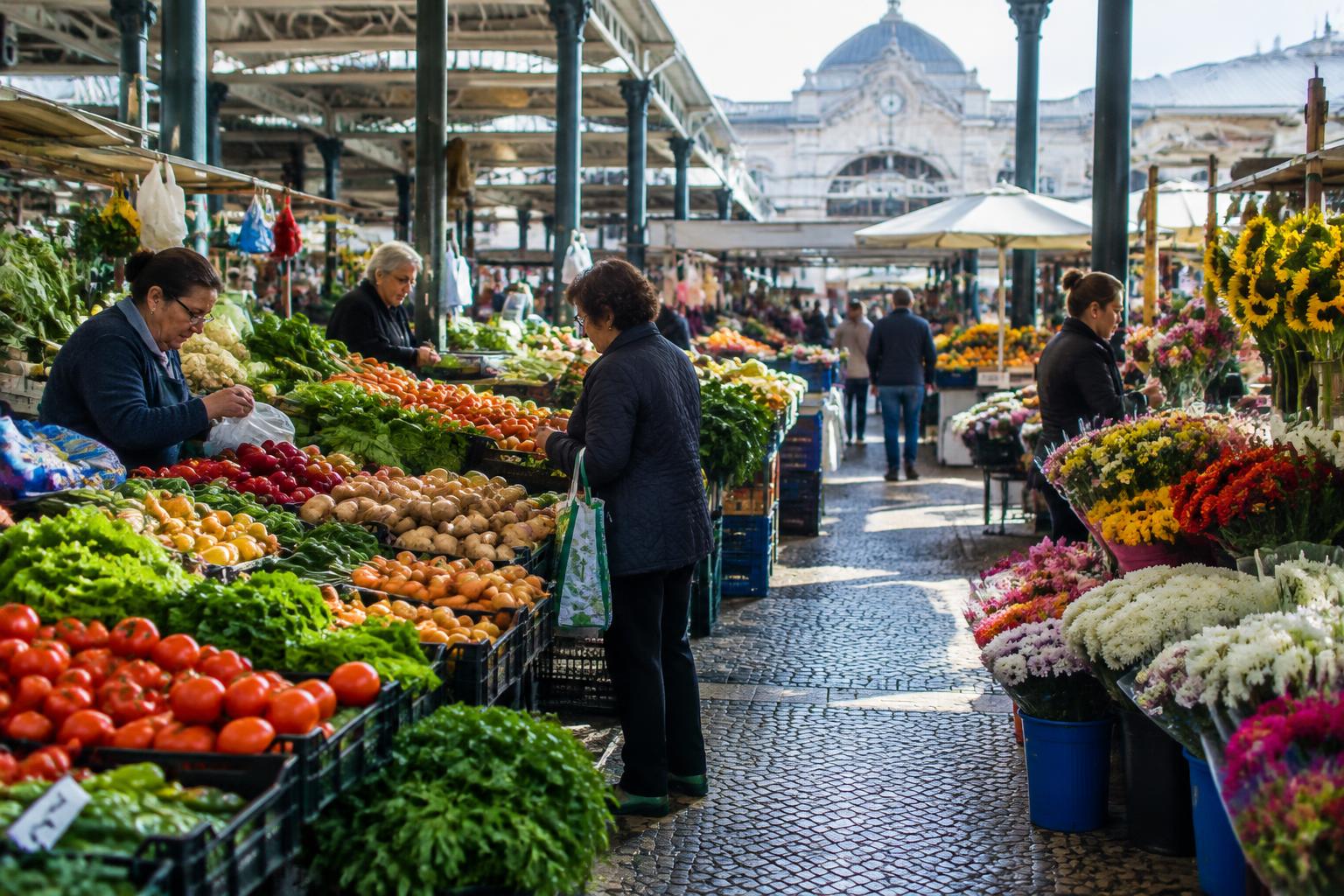
Mercado do Bolhão, in the heart of Porto near Rua de Santa Catarina, underwent a lengthy restoration and reopened with its full ground floor of traditional stalls in 2022, alongside an upper floor of restaurants and a car park below. The market retains its original early-20th-century iron-and-glass structure while modernising its facilities. Ground-floor stalls sell fish, meat, fruit, flowers and cheese, much as they have for decades, and it remains a genuine working market rather than a purely tourist attraction, though it does draw significant visitor footfall.
What to buy at Bolhão
- Fresh fish and seafood from stalls at the market’s centre, particularly sardines in season (roughly June to September)
- Regional cheeses, including queijo da Serra from central Portugal
- Seasonal fruit, with citrus strong through winter and stone fruit in summer
- Dried bacalhau (salt cod) from specialist stalls, useful if you plan to cook it yourself
Mercado do Bom Sucesso
A short walk or tram ride from the centre, in the Boavista area, Mercado do Bom Sucesso combines a smaller produce hall with food stalls and casual dining, and tends to be quieter than Bolhão while still offering good quality fish and produce. It suits a slower browse paired with a casual lunch.
Smaller neighbourhood options
Porto has several smaller neighbourhood markets serving residents rather than visitors, generally with shorter hours and fewer stalls, but often with lower prices. These tend to specialise in day-to-day produce and fish rather than the wider range found at Bolhão, and are worth a visit if staying in Porto for several days and wanting to see shopping patterns outside the main tourist circuit.
Eating around the market
The streets around Bolhão and Rua de Santa Catarina are dense with cafés, pastelarias and tasca-style restaurants. A reasonable approach is to buy ingredients at the market for a self-catered lunch or dinner if staying somewhere with a kitchen, and otherwise use the market as a scouting trip before eating at a nearby tasca serving a daily set menu.
- Start at Bolhão mid-morning to see the full range of stalls before the lunch rush
- Buy perishables last if you plan to carry them around the city for several hours
- Walk to Bom Sucesso or a neighbourhood market on a second day for contrast
- Finish with a tasca lunch nearby rather than a market-adjacent tourist restaurant
Practical notes
As of 2026, a simple market-area lunch in Porto typically costs approximately €10 to €18 per head, while raw ingredients such as fish or cheese bought directly from stalls are generally cheaper than supermarket equivalents, though prices vary by season and stall. Most stalls accept cash readily; card acceptance has improved but is not universal at smaller vendors.
Francesinha and where to eat it properly
Porto’s signature dish, the Francesinha — a sandwich layered with cured meats and steak, covered in melted cheese and a thick beer-and-tomato-based sauce — is widely available but inconsistent in quality. It is not typically sold at market stalls themselves, since it requires a proper kitchen and fryer; instead, look for long-established cafés and tascas a short walk from Bolhão, where locals queue at lunchtime rather than tourist-oriented spots on the main shopping streets. A genuine Francesinha is a filling meal on its own and pairs well with a cold beer rather than wine.
Port wine lodges as a complement to a market visit
Across the Douro river in Vila Nova de Gaia, the historic port wine lodges offer tastings and cellar tours that pair naturally with a market-focused day in Porto itself. A common pattern among visitors is to spend the morning at Bolhão or Bom Sucesso, cross the Dom Luís I bridge in the afternoon, and finish with a tasting at one of the lodges before returning for dinner — a route that uses the city’s two riverbanks for two distinct food experiences in a single day.
A sample half-day market route
- 9am: arrive at Mercado do Bolhão and walk the full ground floor before buying anything
- 9.45am: buy a few items — cheese, fruit, a pastry — for a market breakfast at an upstairs or adjacent café
- 11am: walk or tram to Mercado do Bom Sucesso for a quieter second look and comparison
- 1pm: lunch at a nearby tasca with a prato do dia rather than a market-adjacent tourist restaurant
- Afternoon: cross to Vila Nova de Gaia for a port wine lodge tour if time allows
Tripeiros: Porto’s culinary identity
Porto residents are nicknamed tripeiros (‘tripe eaters’), a reference to the city’s historic dish tripas à moda do Porto, said to date from a period when the best cuts of meat were sent to equip ships and the population made use of offal instead. The dish, along with the broader Porto tradition of hearty, meat-forward cooking, is still found at traditional restaurants near the markets and explains why Porto’s food culture leans heavier and more rustic than Lisbon’s in several respects.
Buying bacalhau to take home
Dried salt cod is a popular purchase at Bolhão, but it travels less easily than visitors sometimes expect: it is heavy, requires desalting over at least 24 hours of soaking before cooking, and airlines occasionally raise questions about strongly smelling food in checked luggage. If buying bacalhau as a gift or souvenir rather than to cook locally, vacuum-packed, pre-soaked options sold at specialist stalls are a more practical choice for travelling.
Pastéis de nata and the bakery stalls
Though more closely associated with Lisbon, good pastéis de nata (custard tarts) are widely available in Porto too, including from bakery counters inside and around Bolhão. Look for a visibly busy counter with trays coming out regularly rather than a static display case, since the tarts are best eaten within a few hours of baking, ideally still slightly warm, dusted with cinnamon or icing sugar to taste.
A note on getting around with purchases
Porto’s historic centre is hilly, and carrying a heavy market haul up from Bolhão towards the riverfront Ribeira district is more tiring than it looks on a map. If self-catering, it’s worth shopping close to the end of a day’s walking rather than the start, or using the funicular or metro rather than walking the steepest stretches with full bags.
Combining a market visit with a riverside walk
From Bolhão, it’s roughly a 20–25 minute walk downhill to the Ribeira riverfront, making it straightforward to combine a market morning with an afternoon by the Douro. Buying a light lunch of bread, cheese and fruit at the market to eat by the river is a cheaper and often more pleasant option than the tourist-priced restaurants directly on the Ribeira waterfront.
Why it’s worth the detour
Porto’s markets reward unhurried visits. Bolhão’s restoration has kept its working character intact rather than turning it into a purely decorative space, and the smaller markets around the city offer a useful contrast for anyone curious about how Porto actually shops day to day.
Check before you go
Confirm Mercado do Bolhão’s current opening days and any stall closures locally, as hours can vary and some stalls close on Sundays.
Sources and official information
Prices and timetables are approximate and change often. Spotted an error? Tell us — corrections are noted under our editorial policy.
About the author
Yasmine BenaliFood & markets editor. Yasmine covers food and markets: how to shop a morning market, eat well in a town you do not know, and approach street food sensibly.
Related guides
Food & Markets
The Market Morning Guide: How to Shop Like a Local
How to spend a market morning well, from arrival time to etiquette, with examples from markets in Portugal, Spain and Morocco.
By Yasmine Benali · 6 min read
Food & Markets
Eating Well in a Town You Don’t Know
A practical method for finding good, honest food in an unfamiliar town, from reading a market stall to spotting a kitchen that cooks for locals.
By Yasmine Benali · 6 min read
City Guides
Lisbon on Foot: A Slow Three-Day Walking Itinerary
A deliberately unhurried three-day route through Lisbon on foot and tram, covering Baixa, Alfama, Belém and Príncipe Real at a slow pace.
By Marta Oliveira · 6 min read