A Slow Month in Valencia: How to Actually Settle In
Valencia rewards a longer stay more than a quick weekend trip. Here is how to structure a month in the city, from neighbourhoods to markets to day trips.
By Daniel Reyes · Published 28 December 2025 · Updated 10 March 2026 · 5 min read
At a glance
- Monthly apartment rentals in Valencia are typically 25–40% cheaper per night than short stays
- Ruzafa, El Carmen and the area near Mercado de Colón each offer a different daily rhythm
- The Turia Garden, a former riverbed turned park, runs the length of the city, free to use
- A month allows repeat visits to the same market stalls, which is where real savings and connections happen
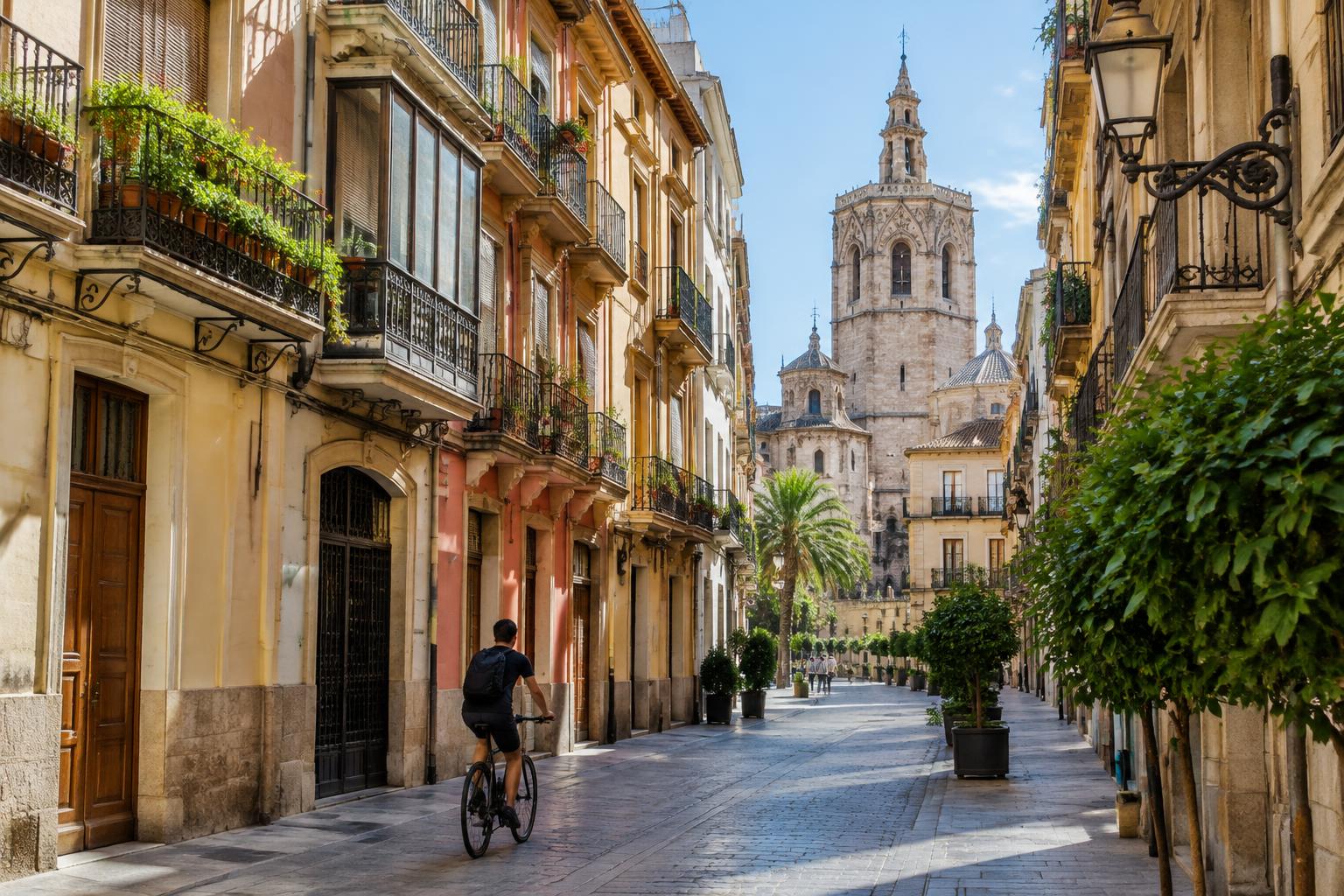
Valencia is often treated as a two or three-day stop — enough time for the City of Arts and Sciences, a paella lunch and a walk through the old town — but the city gives noticeably more back to a longer, slower stay. A month allows a rhythm to form: a regular bakery, a market stall whose owner starts to recognise you, a favourite bench in the Turia Garden at a particular time of day. None of this requires an unusual budget, just a different way of structuring the time.
Choosing a neighbourhood to base yourself in
Ruzafa, just south of the old town, has become Valencia’s most popular neighbourhood for longer stays, with a dense concentration of independent cafés, a daily market and good transport links, though rents here run somewhat higher than elsewhere. El Carmen, in the heart of the old town, offers atmospheric narrow streets and nightlife but can be noisier, especially at weekends. The area around Mercado de Colón and the Eixample district is quieter and more residential, with easy access to both the old town and the beach tram line, and tends to suit a calmer month-long stay well.
The Turia Garden as a daily habit
Valencia’s most distinctive feature of city planning is the Turia Garden, a nine-kilometre park built along the dry former bed of the Turia river after it was diverted following a major flood in 1957. It runs almost the full length of the city, free to use, and includes cycling and running paths, playgrounds, and the City of Arts and Sciences complex at its eastern end. A month-long stay allows this to become a genuine daily habit — a morning walk or cycle rather than a one-off tourist photograph.
Markets, and returning to the same stalls
Mercado Central, one of Europe’s oldest working markets, housed in a striking modernist iron-and-glass building, is worth an initial visit for its scale and architecture, but it is the smaller neighbourhood markets — Mercado de Ruzafa, Mercado de Colón — that reward repeat visits over a month, since returning to the same fishmonger or fruit stall tends to bring better recommendations, occasional small discounts and a genuine sense of local routine.
- Mercado Central — large, historic, good for an initial visit and specific specialty goods
- Mercado de Ruzafa — smaller, neighbourhood-focused, good for a weekly shop
- Mercado de Colón — modernist building, more café-and-tapas focused than a produce market
Day trips worth the time a month allows
A longer stay makes it easy to take unhurried day trips without feeling pressure to see everything in the city itself first. Albufera Natural Park, a lagoon south of the city famous as the birthplace of paella, is reachable by local bus and worth an afternoon for a boat trip at sunset. The medieval walled town of Morella, further afield, and the beach towns of the Costa del Azahar both make for a relaxed day away from the city when the pace of city life needs a break.
A simple structure for the month
- Week 1: settle in, find a regular market stall, bakery and café, walk the Turia Garden
- Week 2: explore the old town neighbourhoods and major sights at an unhurried pace
- Week 3: take one or two day trips (Albufera, Morella or a nearby beach town)
- Week 4: revisit favourite spots, allow unstructured time, and plan onward travel
The appeal of a slow month in Valencia is largely this accumulation of small, repeated routines rather than any single standout sight — though the city has those too. It is a reminder that depth of experience in a place often has more to do with time spent than with distance covered.
A sample monthly budget
- Monthly apartment rental in Ruzafa or near Mercado de Colón: roughly £700–£1,100
- Weekly market shop for home cooking: roughly £35–£50
- Occasional restaurant or tapas meal out: roughly £12–£20 per visit
- City bike or Metro/bus monthly pass: roughly £25–£35
- One or two day trips (bus fares and entry fees): roughly £15–£30 each
Practicalities worth sorting out early
A month-long stay benefits from a few early errands that a short trip would skip entirely: a local SIM card or eSIM for reliable data, a reusable transport card for the Metro and bus network rather than single tickets, and a conversation with the apartment owner about rubbish collection days and building quirks. Spanish shops and markets typically close for a long midday break, often from around 2pm to 5pm, and many smaller shops close entirely on Sundays, so planning weekly errands around this rhythm avoids repeated frustration.
Common mistakes to avoid
Overbooking the first week with sightseeing is the most common mistake in a slow-travel month — the appeal of a longer stay is the unhurried pace, and front-loading every major sight tends to recreate the exhaustion of a short city break within the first few days. Another frequent error is booking accommodation through a short-stay platform at its default nightly rate rather than asking directly about a monthly discount, which can leave real savings unclaimed. Finally, skipping the smaller neighbourhood markets in favour of only the famous Mercado Central misses much of what a longer stay in Valencia is actually good for: the slow, repeated familiarity of a local routine.
Settling into a weekly rhythm
A month-long stay works best with a loose weekly structure rather than a rigid daily plan: a fixed market morning, a regular café for breakfast, perhaps a weekly language exchange or community event found through a local noticeboard or app. Valencia's size makes this kind of routine easy to build, since most central neighbourhoods are walkable or a short bike ride from one another, and the city's generally mild climate for much of the year supports an outdoor-focused daily rhythm centred on the Turia Garden, the beach, or a neighbourhood plaza. This kind of repeated routine, more than any single sight, is usually what visitors describe as the main reward of slowing down in a city rather than rushing through it.
Healthcare and basic admin are also worth a thought before a month away: travel insurance that explicitly covers a stay of this length (some standard policies cap single-trip cover at 28 or 31 days), and registering with the apartment's building if required by Spanish short-stay rental regulations, which vary by region and have tightened in several Spanish cities in recent years. None of this is complicated, but sorting it out in the first few days rather than mid-stay avoids unnecessary stress later in the trip.
Learning a handful of everyday Valencian or Spanish phrases, even imperfectly, tends to open small doors over a month that a shorter stay rarely has time for — market vendors, café owners and neighbours generally respond warmly to the effort, and it is part of what turns a long stay into something closer to a temporary local life than an extended holiday.
Check before you go
Confirm monthly rental terms and deposit conditions in writing before paying, and check current bus timetables for day trips to Albufera or Morella.
Sources and official information
Prices and timetables are approximate and change often. Spotted an error? Tell us — corrections are noted under our editorial policy.
About the author
Daniel ReyesPlanning & slow travel editor. Daniel writes and edits the trip planning and slow travel sections: budgets, packing, documents, connectivity, rail travel and longer stays.
Related guides
Slow Travel
Slow Travel on a Normal Budget: Sample Costs for a Longer, Calmer Trip
Slow travel does not require a sabbatical or a large budget. Here is how to plan a longer, unhurried trip with realistic sample budgets for everyday travellers.
By Daniel Reyes · 6 min read
Slow Travel
Building a Flexible Day Itinerary That Still Gets Things Done
A method for planning daily itineraries loose enough to absorb delays and good discoveries, while still covering the things you actually want to see.
By Daniel Reyes · 6 min read
Food & Markets
Beyond the Boqueria: Barcelona’s Neighbourhood Markets
Where to shop and eat in Barcelona away from the crowded Boqueria, including Santa Caterina, Sant Antoni and Ninot markets.
By Yasmine Benali · 5 min read