Beyond the Boqueria: Barcelona’s Neighbourhood Markets
Where to shop and eat in Barcelona away from the crowded Boqueria, including Santa Caterina, Sant Antoni and Ninot markets.
By Yasmine Benali · Published 5 December 2025 · Updated 20 January 2026 · 5 min read
At a glance
- La Boqueria is beautiful but very crowded, especially midday
- Santa Caterina, Sant Antoni and Ninot are working markets with fewer tourists
- Each neighbourhood market has a distinct character and specialities
- Mornings, especially Tuesday to Friday, are calmest at all of them
La Boqueria, just off La Rambla, is Barcelona’s most famous market and remains worth a look for its sheer scale and colour, but its central location means it is heavily visited and some stalls price accordingly. Barcelona has several other markets that serve residents day to day, offer better value, and give a clearer sense of how the city actually eats.
Mercat de Santa Caterina
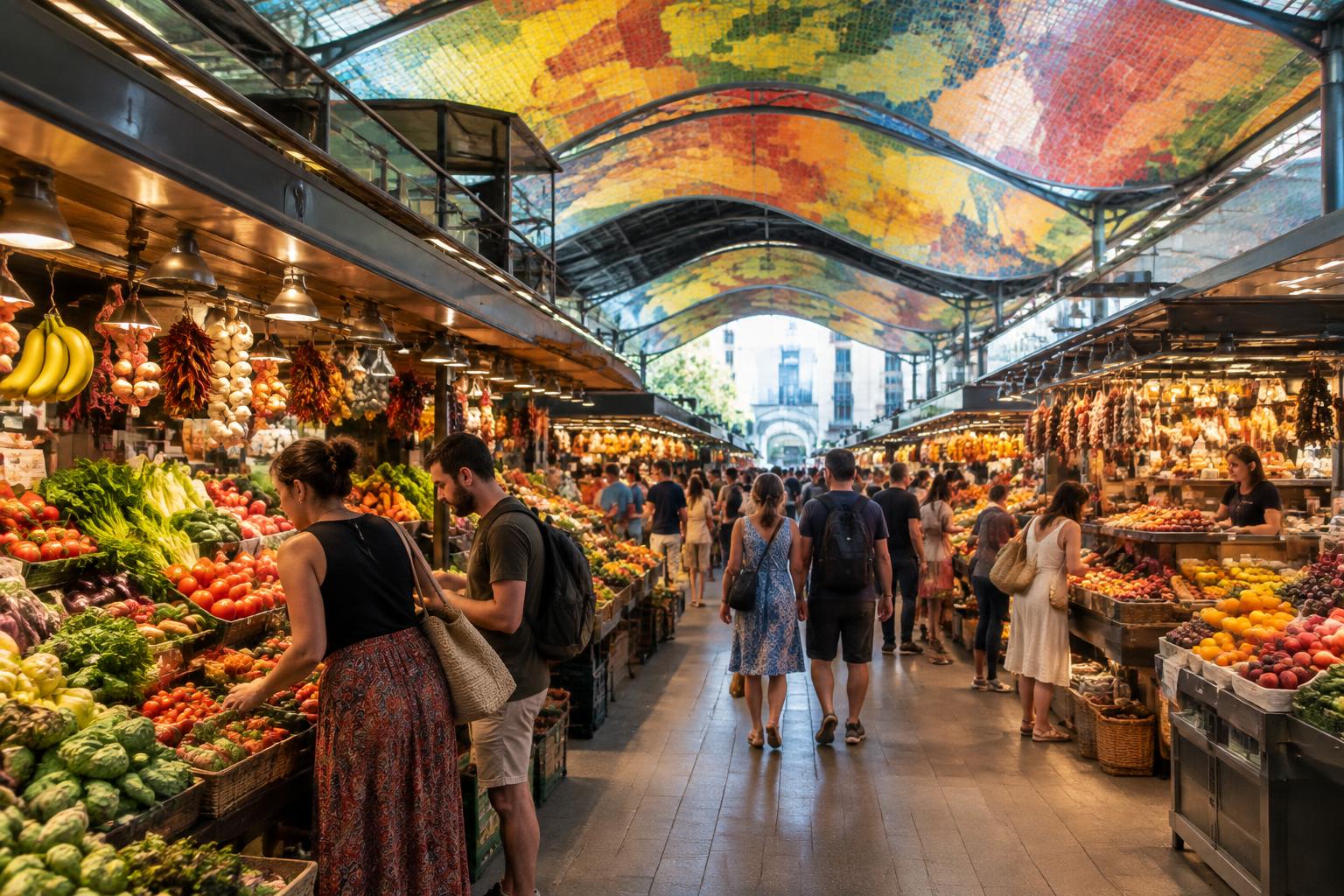
A short walk from the Gothic Quarter, Santa Caterina is instantly recognisable for its undulating, multicoloured tiled roof, added during a 2005 renovation that also uncovered Roman and medieval remains beneath the market, now displayed on site. Inside, it functions as a genuine neighbourhood market with fishmongers, butchers and produce stalls, plus a well-regarded market restaurant. It draws far fewer tourists than Boqueria despite its architectural interest.
Mercat de Sant Antoni
Reopened in 2018 after a long renovation, Sant Antoni in the Eixample district is one of the largest markets in Barcelona and strongly favoured by locals doing their weekly shop. On Sunday mornings it also hosts a long-running book and collectables market around its perimeter, a separate but complementary draw. Food stalls here are generally better value than central options.
Mercat del Ninot
Tucked into the Eixample near Carrer d’Aragó, Ninot is smaller and quieter still, popular with residents of the surrounding apartment blocks rather than visitors. It’s a good choice for a straightforward, unhurried look at fish, meat and produce stalls without crowds, and has a handful of counters serving tapas and small plates for lunch.
- Santa Caterina — best for architecture plus a genuine mixed market, central location
- Sant Antoni — best for scale and value, plus a Sunday book market nearby
- Ninot — best for a quiet, unhurried, local browse
- Boqueria — worth a short visit for its history and produce displays, but go early or skip the busiest midday hours
What to eat in each
Catalan markets are strong on seafood, cured meats such as fuet and botifarra, and seasonal vegetables including calçots in late winter and early spring. Santa Caterina and Ninot both have small bar counters where a market worker or vendor might recommend the day’s best catch, which is often a better guide than a printed menu.
Getting there
All three alternative markets are well served by Barcelona’s metro network: Santa Caterina is near Jaume I station, Sant Antoni has its own named metro stop, and Ninot is close to Hospital Clínic station. This makes it straightforward to combine a market visit with other sightseeing without needing a car.
- Pick one neighbourhood market per day rather than trying to see several at once
- Go mid-morning on a weekday for the calmest browsing conditions
- Ask a stallholder what’s in season rather than ordering from memory
- Carry cash, as smaller stalls may not accept cards
Value in 2026
As of 2026, a tapas-style lunch at a market counter in Santa Caterina or Sant Antoni typically costs approximately €12 to €22 per head, noticeably less than equivalent stalls directly inside Boqueria, though exact prices vary by stall and season.
Mercat de la Barceloneta
In the beachside Barceloneta neighbourhood, this smaller, modern market building serves a mixed community of long-standing residents and newer arrivals, and is particularly strong on fish given its proximity to the harbour. It makes a natural stop if combining a market visit with a walk along the seafront, and is noticeably quieter than the central markets even in high season.
Vermut culture around the markets
Many of Barcelona’s neighbourhood markets sit close to traditional vermuterías, bars specialising in vermouth served with small snacks such as olives, anchovies or a tin of good conservas (tinned seafood). The ritual of ‘fer el vermut’ — having a pre-lunch vermouth, typically between midday and 2pm on a Sunday — is a genuinely local custom worth joining, and pairs naturally with a market morning since many of the snacks served originate from stalls a few streets away.
Calçotada season
Calçots, a type of large spring onion, are a Catalan speciality roasted over open flames and dipped in romesco sauce, traditionally eaten with your hands and a bib, typically available from roughly late January to March or April. During this window, Santa Caterina and Ninot both carry fresh calçots, and some market restaurants run short calçotada menus; outside the season, they are largely unavailable, so timing a visit around this specialty takes some planning.
A sample two-market route
- 9.30am: start at Santa Caterina, combining a walk through the market with a look at the Roman remains beneath it
- 11am: walk roughly 20 minutes (or take the metro) to Sant Antoni for a contrast in scale
- 12.30pm: have a vermut stop near either market before lunch
- 1.30pm: eat a tapas-style lunch at a market counter rather than a nearby tourist restaurant
- Optional: finish at Ninot in the late afternoon for a quieter, uncrowded final look
Payment and practicalities
Most stalls in Barcelona’s neighbourhood markets now accept cards, a shift from a decade ago, though very small cash amounts (a single piece of fruit, a coffee at a stand-up counter) may still be cash-preferred. Markets typically close on Sundays, with the notable exception of the Sant Antoni book and collectables market, which runs on Sunday mornings around the building’s exterior.
A note on Boqueria’s restrictions
In recent years Barcelona’s city authorities have introduced rules limiting large tour groups inside La Boqueria during peak hours, partly in response to overcrowding concerns from both traders and residents; group sizes and visiting hours for organised tours are periodically adjusted, so independent visitors arriving outside the busiest window will generally have an easier time than those following the regulations around group tours.
What each market is best for, at a glance
- Santa Caterina — a central, architecturally striking stop combining Roman ruins, a genuine mixed market and a well-regarded restaurant
- Sant Antoni — scale, value and a Sunday book market alongside the main food hall
- Ninot — the quietest, most residential browse of the four, good for an unhurried visit
- Barceloneta — the strongest choice for fresh fish given its seafront location
Combining markets with Barcelona’s broader food scene
Barcelona’s neighbourhood markets sit well alongside the city’s wider tapas and pintxos culture; several bars near Santa Caterina and Ninot serve small plates using produce bought that same morning from the stalls next door, a pattern worth asking about directly, since it isn’t always advertised.
A fuller picture of the city
Boqueria remains a legitimate stop for its history and visual impact, but Santa Caterina, Sant Antoni and Ninot show a side of Barcelona’s food culture that’s less performative and, for many visitors, considerably more enjoyable to shop and eat in.
Check before you go
Check each market’s specific opening days locally, as most Barcelona markets close on Sundays except for associated weekend street markets such as the Sant Antoni book market.
Sources and official information
Prices and timetables are approximate and change often. Spotted an error? Tell us — corrections are noted under our editorial policy.
About the author
Yasmine BenaliFood & markets editor. Yasmine covers food and markets: how to shop a morning market, eat well in a town you do not know, and approach street food sensibly.
Related guides
Food & Markets
The Market Morning Guide: How to Shop Like a Local
How to spend a market morning well, from arrival time to etiquette, with examples from markets in Portugal, Spain and Morocco.
By Yasmine Benali · 6 min read
Food & Markets
Rome: Eating Like a Local in Trastevere and Testaccio
How to eat well in Rome’s Trastevere and Testaccio neighbourhoods, from the historic Testaccio market to trattorie that serve Roman classics.
By Yasmine Benali · 5 min read
Food & Markets
Eating Well in a Town You Don’t Know
A practical method for finding good, honest food in an unfamiliar town, from reading a market stall to spotting a kitchen that cooks for locals.
By Yasmine Benali · 6 min read