Rome: Eating Like a Local in Trastevere and Testaccio
How to eat well in Rome’s Trastevere and Testaccio neighbourhoods, from the historic Testaccio market to trattorie that serve Roman classics.
By Yasmine Benali · Published 10 November 2025 · Updated 1 March 2026 · 5 min read
At a glance
- Testaccio is widely regarded as Rome’s culinary heartland, home to its covered market
- Trastevere is touristy on main streets but quieter a block or two off them
- Roman classics to look for include cacio e pepe, carbonara, amatriciana and supplì
- Lunch service typically runs 12.30pm–3pm, dinner from about 7.30pm or 8pm
Testaccio and Trastevere sit on opposite banks of the Tiber and offer two different, complementary ways into Roman food culture: one built around a working market and old slaughterhouse-district trattorie, the other around narrow medieval streets that, away from the busiest squares, still hold genuinely local kitchens.
Testaccio market
Mercato di Testaccio, rebuilt in a modern covered structure in 2012, is considered by many Roman food writers to be the city’s best produce market, serving the surrounding residential neighbourhood rather than tourists. Inside, alongside fruit, vegetable and fish stalls, several counters sell prepared food, including well-regarded trapizzino (a pocket of pizza bianca filled with braised meats or vegetables) and classic Roman sandwiches. It’s a good lunch stop as much as a shopping destination.
Why Testaccio matters to Roman cooking
The neighbourhood grew up around Rome’s former slaughterhouse (Mattatoio), and this history explains the area’s strong tradition of offal-based dishes such as coda alla vaccinara (oxtail stew), trippa alla romana and pajata, still found on menus at long-established neighbourhood trattorie. Diners uninterested in offal will still find classic pasta dishes done well here, including cacio e pepe and amatriciana.
- Cacio e pepe — pasta with pecorino romano and black pepper, deceptively simple and a good test of a kitchen
- Carbonara — eggs, guanciale, pecorino romano and pepper, traditionally without cream
- Amatriciana — tomato, guanciale and pecorino romano, named for the town of Amatrice
- Supplì — fried rice balls with a molten mozzarella centre, a common Roman street snack
Trastevere: beyond the main squares
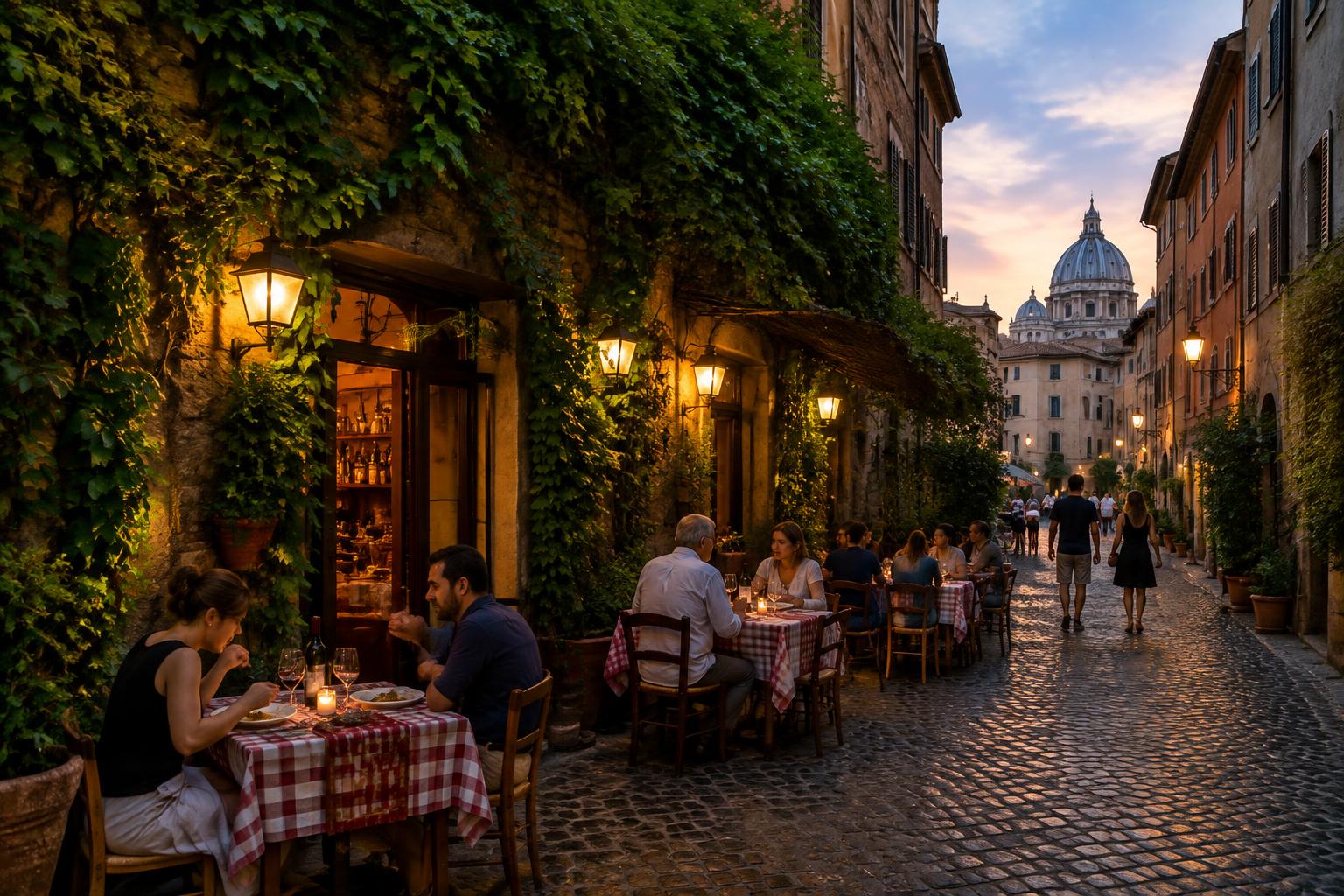
Trastevere’s central squares, particularly around Piazza Santa Maria in Trastevere and Piazza Trilussa, are busy with visitors most evenings, and restaurants facing directly onto them can be inconsistent and priced for footfall rather than return custom. Moving a block or two into the quieter residential lanes generally finds better value and more traditional cooking aimed at locals, including small family-run trattorie that have operated for decades.
Timing a day between the two neighbourhoods
Testaccio and Trastevere are close enough to combine in a single day. A reasonable plan is a late morning at Testaccio market followed by a light lunch there, an afternoon walk across the river into Trastevere, and dinner at a quieter trattoria away from the main squares once the evening service begins.
- Visit Testaccio market mid-morning, before the lunch rush at its food counters
- Eat a market lunch of trapizzino or a Roman sandwich rather than a sit-down meal
- Cross to Trastevere in the afternoon and explore streets off the main squares
- Book ahead for dinner at a well-regarded neighbourhood trattoria, especially on weekends
Budgeting for 2026
As of 2026, a market lunch at Testaccio typically costs approximately €6 to €12 per head, while a full trattoria dinner in either neighbourhood generally runs from approximately €25 to €45 per head excluding wine, with prices noticeably higher directly on Trastevere’s main squares.
Monte Testaccio and the neighbourhood’s wine bars
Monte Testaccio, an artificial hill formed from an estimated 53 million discarded ancient Roman amphorae used to transport oil and wine, sits at the heart of the neighbourhood and gives it its name. Several informal wine bars and clubs have been carved into the hill’s base over the decades, and the surrounding streets host a number of enoteche (wine bars) serving natural and regional Italian wines by the glass alongside small plates — a good, lower-key alternative to a full trattoria dinner.
Supplì versus arancini: a Roman distinction
Visitors sometimes use ‘arancini’, the Sicilian term, when ordering in Rome, but the city’s own version, supplì, is distinct: typically oblong rather than round, and classically filled with a simple tomato-rice mixture and a mozzarella centre that stretches into strings when pulled apart (giving rise to the nickname supplì al telefono, ‘telephone-wire supplì’). Good versions are found both at Testaccio market counters and at Roman pizzerias al taglio, usually sold by weight or per piece as a starter or snack rather than a main course.
Gelato notes for the area
Neither Trastevere nor Testaccio is Rome’s primary gelato district, but both have reliable artisanal gelaterie serving traditional flavours. A general quality signal travels well here too: gelato displayed in deep, covered metal tubs rather than piled into bright, oversized mounds is more likely to be made with real ingredients and less with stabilisers and artificial colouring.
A sample full day combining both neighbourhoods
- 10am: arrive at Mercato di Testaccio, walk the stalls, then have a trapizzino or sandwich at one of the food counters
- 11.30am: short walk to Monte Testaccio and the surrounding streets to see the amphorae hill
- 1pm: light lunch or wine-bar snack at one of the neighbourhood’s enoteche
- 3pm: cross the river towards Trastevere, exploring streets off Piazza Santa Maria in Trastevere
- 8pm: dinner at a family-run trattoria a block or two from the main squares, booked ahead if possible
Ordering wine without overthinking it
Roman trattorie typically offer a short, regionally focused wine list alongside house wine (vino della casa) served by the carafe (quarto, mezzo or litro for a quarter, half or full litre), which is usually a perfectly good and inexpensive option rather than a lesser choice; reserving bottled wine for a more special occasion is standard local practice rather than frugality.
Pizza al taglio as a flexible lunch
Beyond sit-down trattorie, pizza al taglio (pizza by the slice, sold by weight) is common across both neighbourhoods and a practical, low-cost way to eat between larger meals. A good al taglio shop bakes in small batches through the day rather than leaving large trays sitting under heat lamps for hours; ask for a slice to be reheated briefly if it’s been out a while, a completely normal request at these shops.
Markets and food shops beyond Testaccio
Trastevere itself has fewer formal markets but a reasonable density of small alimentari (grocers) and salumerie selling cured meats, cheese and bread suited to an impromptu picnic, useful on a warm afternoon by the river or in one of the neighbourhood’s small piazzas away from restaurant seating.
Sunday and Monday closures
Testaccio market is typically closed on Sundays, and many Roman trattorie take a weekly rest day, commonly Sunday evening or all of Monday; planning a Testaccio-focused day for a weekday, and checking a specific trattoria’s rest day before a special dinner, avoids a wasted trip.
A fuller taste of Rome
Testaccio and Trastevere together give a more rounded picture of Roman food than the centro storico alone: one shows the market-driven, offal-rich tradition of a working-class district, the other the everyday trattoria culture that persists just off its most photographed streets.
Check before you go
Check Mercato di Testaccio’s current opening days and hours locally, and note that many Roman trattorie close for a rest day, commonly Monday or Sunday evening.
Sources and official information
- Roma Capitale, official tourism information
- Mercato di Testaccio
- Italian Ministry of Health, food safety information
Prices and timetables are approximate and change often. Spotted an error? Tell us — corrections are noted under our editorial policy.
About the author
Yasmine BenaliFood & markets editor. Yasmine covers food and markets: how to shop a morning market, eat well in a town you do not know, and approach street food sensibly.
Related guides
Food & Markets
Beyond the Boqueria: Barcelona’s Neighbourhood Markets
Where to shop and eat in Barcelona away from the crowded Boqueria, including Santa Caterina, Sant Antoni and Ninot markets.
By Yasmine Benali · 5 min read
Food & Markets
Eating Well in a Town You Don’t Know
A practical method for finding good, honest food in an unfamiliar town, from reading a market stall to spotting a kitchen that cooks for locals.
By Yasmine Benali · 6 min read
City Guides
How to Read a City Square: A Traveller’s Guide to Public Space
Learn to read the layout, rhythm and history of great European and North African squares, from Lisbon’s Praça do Comércio to Marrakech’s Jemaa el-Fnaa.
By Marta Oliveira · 5 min read